
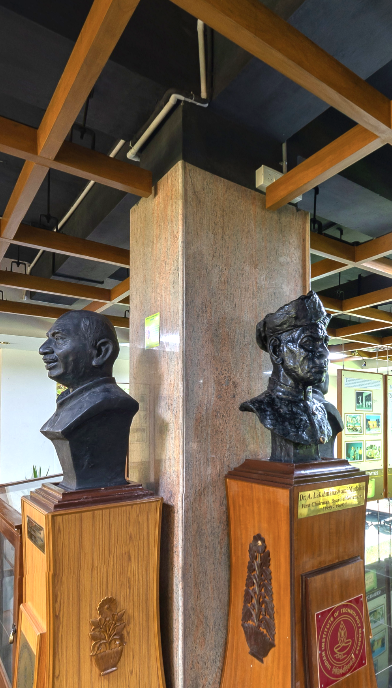
Blackbuck
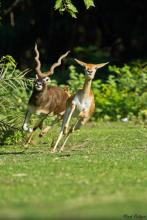
- Photographs , Flora & Fauna
Blackbuck
Common Grey Mongoose
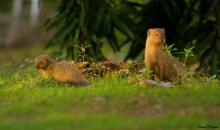
- Photographs , Flora & Fauna
Common Grey Mongoose
Blackbuck
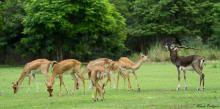
- Photographs , Flora & Fauna
Blackbuck
Bonnet macaque

- Photographs , Flora & Fauna
Bonnet macaque
Blackbuck
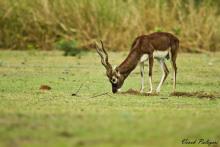
- Photographs , Flora & Fauna
Blackbuck
Common Grey Mangoose
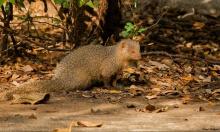
- Photographs , Flora & Fauna
Common Grey Mangoose
Blackbuck
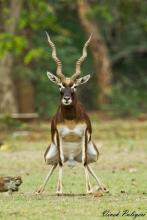
- Photographs , Flora & Fauna
Blackbuck
Blackbuck
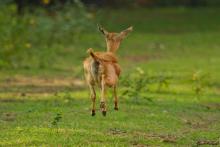
- Photographs , Flora & Fauna
Blackbuck
Spotted Deer
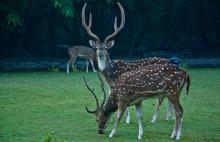
- Photographs , Flora & Fauna
Spotted Deer
Black buck
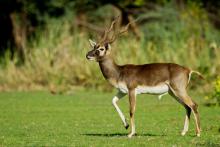
- Photographs , Flora & Fauna
Black buck
Blackbuck
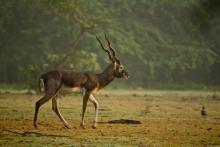
- Photographs , Flora & Fauna
Blackbuck
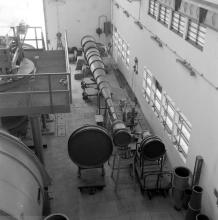
At the Fluid Mechanics Laboratory of IIT Madras
- Photographs , Academic Facilities, Equipment
According to a senior professor, this photograph shows one end of the Bangalore Wind Tunnel with honeycomb, which still exists in the laboratory. From the information we gathered, we learned that it was first designed as a Diffuser Test Bench by Mr. Mathew, who was the first Ph.D. scholar of the Fluid Mechanics Laboratory under the supervision of Prof. Klein. According to our source, it was used somewhere between the years 1968-1973. It apparently used to make a lot of noise, even making the entire laboratory vibrate! After Mathew, Prof. Lakshminarasimhan, used the facility for his MS and Ph.…
At the Fluid Mechanics Laboratory of IIT Madras
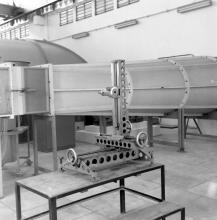
- Photographs , Academic Facilities, Equipment
This device is most likely a part of the Acoustic Facility specially designed by Prof. B. V. A. Rao to generate high intensity noise (160-180 dB) to test the first SLV-3 rockets developed at the Vikram Sarabhai Space Centre, Trivandrum before the launch. Acoustic Horns were used for this purpose. It was one of the most challenging and dangerous projects undertaken by IIT Madras.
At the Fluid Mechanics Laboratory of IIT Madras
- Photographs , Academic Facilities, Equipment
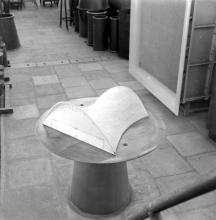
According to a senior professor, this is a roof shell model which was tested in the Big Tunnel, also known as the Gottingen Tunnel, “to get wind pressure distribution and the total wind loads for various directions of the wind.” This photograph was found in an envelope among other photographs given to us as part of the Gourishankar Collection. The envelope came with minimum details about the photographs in the album. However, information suggests that it was taken at the Fluid Mechanics Laboratory. If you know any details or information about this photograph, please reach out to us.
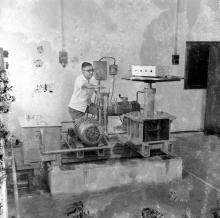
Prof. B. V. A. Rao with the Hydraulic Vibration Machine
- Photographs , Academic Facilities, Faculty, Equipment
The Hydraulic Vibration Machine was designed and developed at the Machine Dynamics Laboratory of IIT Madras under Prof. B. V. A. Rao’s supervision. A team of technologists helped develop this machine. According to a report in The Hindu (30 August 1971), the machine was made for the first time in India, and it was made with indigenous materials. The cost of the machine, at 20,000 rupees, was around one fifth of imported ones. It was developed to test “vibration of machine structures and components'' according to the report. The report also mentions that the Thumba Space Research Station,…


- Contribute
to the Centre -
 Monetary
Support  Digital
Material
