
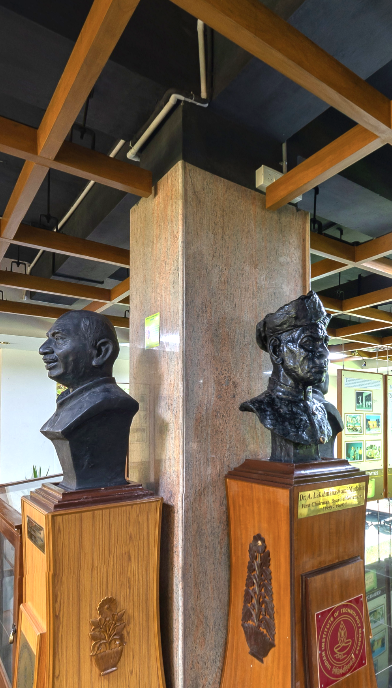
Dr. Siegfried Seinecke in conversation with Prof. V. Jagadeesh Kumar
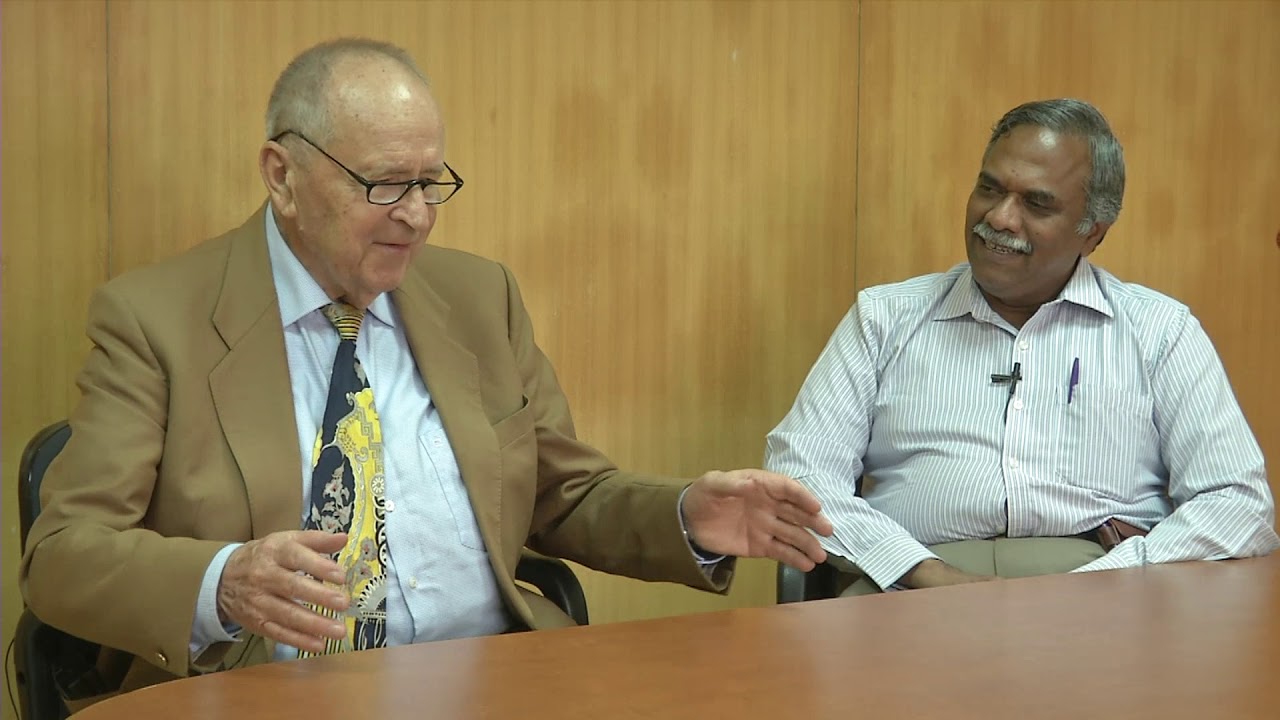
We have with us Professor Sienecke who was one of the
founding professors of IIT Madras. Welcome sir.
Thank you. So, when was your first visit to IIT Madras?
It was around the 1st July of the year 1963.
Oh, You are you you really came very early in the .
We we we came we came by boat from Genova to
Bombay. Ok.
Then, we were received by
some government persons. We were taken,
we were taken into the railway over the night,
and we have reached; we have reached here
in the morning. On the early in the morning and
all the guests, all the colleagues of, they came to the airport.
Now, they came to the railway station. Railway station.
And we had a series of cars you know.
Going from the railway station here.
So, we have been the first family, wife and two children
and myself to go into a ready-made house, 2nd crossroad.
Ok. Even the beds were prepared.
Ok. And all the colleagues, they had to live in town for some years.
Ok. You know.
So, we were the
first family you know starting here,
fresh it was very surprising, and the worst was there were some,
some animals you know climbing up like this you know.
I thought they were snakes you know. Lizards.
Geckos ye snakes, small snakes geckos you know. Geckos yes.
Geckos were surprising. And next morning around 9 o'clock
Professor Venkatarao came to our house. Ok.
With this cars, and I was called to sit in his car.
So, he was you know he was
taking me over to his department. Department.
No, no breakfast, I had to come. Ok.
To his department and till the end, he was my father here.
Ok yes. You know he was very old, very old,
he was my father here like my father
because in the second year,
I had some success and you know the main aim was
to introduce German methods. Ok.
That means the education should be more practical. Yes.
So, I started to develop experiments for the students.
40 experiments within 2 years
Oh. And each of them had to go through the experiments you know.
This was my main topic.
But the assistant professor didn't liked it.
Ok. Because I try to engage
them you know to supervise, they didn't like
so, they didn't like
because they only kept to make paperwork.
Ok. They had textbooks and put the results into the,
Board And so on.
They did not like me.
They told they put a rour in the in the in the town.
Ok. Saying we have got a young boy from Germany and
he calls himself professor. Ok.
Venkatarao. Come on boy, come on boy. Yeah ok.
Take your take your hair and do not mention, go on.
Ok. You are good like a father you know.
Yes. so, in fact Professor Venkatarao was the He was great.
Head of the Department for a very long-time .
He was great. He went to Africa then. Yes.
So, who were all the other German professors
who worked with you at the time?
Professor Lutz. Lutz.
He came shortly after me so.
Steam machines. Ok.
He was from Damstra.
Then Heitland. He came from Caltech.
And, Scheer he was here
long time earlier. Mechanical engineering
A tall fellow, he was he leaving
IIT later and went to Ethiopia.
And he got married there also.
So, I met him a few years ago,
he was spending the the largest portion
of his life in Ethiopia.
Ok. So, a very experienced you know worker.
Then, Doctor Koch in physics.
you know running the workshop,
Dr. Klein, he was in charge of languages, I guess.
I mean it was a a group of very different persons.
Ok. Very different you know.
We were the only young family.
I was only 30. Ok.
But it worked,
it worked no problem and from the beginning,
I had friends in in Germany. Trainees
who came to my institute in Germany to be trained,
even to do do their doctorate work. It was. Yes yes
Dr. Garud you know, he did his doctorate work
in my department and I also helped him.
Dr. Banerjee also Yes.
was here. So, when I came here
the first Sunday, I went to Adyar,
and I found the family of Padmanabhan.
Ok. Padmanabhan, I found his family on the first weekend
imagine, and from that time,
I visited this family nearly every week once.
Ok. Even now, I saw his sister Vasantha.
Ok. He returned to Germany; he worked for IBM.
Yes. Precision mechanic was his subject.
So, this was you know. Amazingly
I came in contact with those trainees,
and they took me over,
invited my wife and then,
they told me why don't you come with us?
So, I was I had my doctorate work ready so, I was open
to leave the Institute in Brunswick
and so, I decided to go. Ok.
So, I went to Bonn, I recontract, and waited and then,
Professor Klaus came, he came to see the trainees. Ok.
And they introduced me to Professor Klaus.
He was a project leader. Ok.
And they told him, my dear professor,
this is the chap who will go with us to Madras.
Then, he replied, which fool has influenced you to go over there?
Which fool? It was a joke you know. Yeah.
But this was this kind of joking.
So, you know I was shifted and prepared to go here.
Ok. By those friends.
Good. When I, when I came back to
Germany 2 years later, some of them were still there.
So, I was received again, and
I was honored saying 'foreign return'.
Ok. That means, he comes back,
he has a new car, he is rich now you know.
Foreign return. Foreign return.
You know that word?
Professor Mayer’s also came from Brunswick?
He came. Much later.
Yeah, yeah he came after me. Ok.
Shortly after, yeah yeah, he was from Brunswick
and he was here for a long time.
So, you have been coming here regularly,
how do you feel that IIT has progressed?
Now, you know I came here in; I came here in 18
1989, 91, 93, 2009, 2013, I guess in 2017 now.
You know you can judge about
development only after having a distance.
A distance of looking at it and knowing so, this time
I had a distance of 4 years. Ok.
And I found it has developed well.
It has been it has become larger and more students
and more whatever complex devices. I am really
happy about this development,
and I think you know after the first two years here,
it was declared that there had been four IIT’s.
Yes. This was number 1.
Number 1. And I hope this is still number 1.
It is number 1 in 2016. Yeah, Yeah.
Among all the 20 IIT’s.
Yeah, it is number 1 among the 23 IIT’s,
among all the colleges in the country
and the we hope to keep that number one in 2017.
It it was declared number 1 in 2016
and we hope to get it in 2017 also.
Ok. You know I am I am in a position to support India you know
because this is part part of my home,
it is in your home country
so, I like it as it is now,
but nobody will believe this is is this is
institution in India because
in the opinion of the majority of European,
India is a lousy country, you know.
Full of trouble and poverty and so on,
misusing girls you know in the newspaper. Newspaper, yes sir.
So, they won't believe,
but I I am convinced it is a country
where you have proper developments like this
and I will defend it, I will defend it
and say this is my truth about the country.
So, how were the classes held? What was the starting time?
Starting time? Yeah, for the classes?
I started to begin the to install equipment. Ok.
You know you had the buildings, empty rooms, the equipment
from Germany was in the store,
nobody had opened the boxes. Nobody.
So, I put them out, started to have early experiments,
then I had a large room to be installed with tables
and switching boards and whatever.
So, I had to go to the Director.
And ask him how should we do it, this way, this way,
he would always say no, no. This was his answer: no.
So, I left him and did it in my way. That means,
I had a long long room. Ok.
And I had two chambers, two chambers here, here
two of them and had the switching board above,
had the tables in the wall
and those tables were made of Bangkok Teak.
Oh. You cannot afford now.
Yes, we cannot afford. You have to buy Bangkok Teak.
Ok. Is Bangkok is in the next country?
Yeah Thailand, it is in Thailand.
Thailand no. Yeah.
No Thailand, Bangkok is in Thailand.
Marvelous, it they were built in the workshop here.
So, the workshop was run by an
an elderly people also, he also
like he was like my father. So, once I went to him
to have something and it was delayed.
He tried to help me and explained
you know boy like that you know.
You my boy, I must apology you
for not you know getting ready,
I did not know what is the word apology.
ok. Apologize .
Yeah. Apologize those you know old people,
there were like my father, it was so nice you know,
I was the youngest here, I was active and then,
this laboratory was ready, let us say 10 tables you know
2, 4, 6 and 10
ready-made and we we covered the the cables with with
thick face plywood. All were expensive.
So, then I called the Director, what happened?
All my mechanic would come. They would come,
they would they would hide themselves
behind the pillar you know. Waiting, waiting, waiting,
the Director came in looking at this this
room he never came back. He never came back. Came back.
So, we had to accept it, the it was against his own plans. Ok good.
He never came back.
So, do you recollect any of the Indian professors
at that time who joined along with you?
Remember you mean?
Other other Indian professors
who joined the electrical department?
Venkata, G. V. K. Murthy.
Oh, V. G. K. Murthy yes. Was in a nice, he was in
measurement technology. Yes.
He was very polite and very good staff .
Achyuthan was bad. Achyuthan.
Achyuthan was arrogant. Ok.
Really, he did not like me at all. Yeah.
So, the many of them. Banerjee was there?
Banerjee was there. And Narayan Rao?
Narayan rao. He did his PhD in high voltage
from Erlangen, I think.
V.G.K. Murthy was a very polite person I must say.
Ok. In your first visit, how long you were here?
I only stayed here for 2 years. 2 years ok.
But you know the appreciation of I got later during the visits.
Ok. Imagine, I came here in the year 89,
I brought my daughter with me.
My daughter was a linguist, a language
Specialist. Expert
in English and French.
she worked for the European Union in Luxembourg
in the German department.
And I took her to India for three weeks each.
We have been in Delhi and Bombay, in Nagpur and here and so on
and she she put lectures on
the aim on the purpose of the European Union.
In the age of 30 you know. Ok.
Young girl playing world policy
because Doctor Rao told me
why do not you take your daughter she would be an expert.
So, I she did , she had she posed lectures about
the European union in many places and without an official order.
It was a private talk you know with Yes.
over headphones and everybody clapped you know.
They liked it; they liked the way
how she did it, it was really great.
My daughter was number 1, I was number 2.
Ok. She was so open minded and she in all the places,
she was attracted by the by the girls you know. Ok.
She was you know among the girls
and they they took her into the girls hostel.
Oh Ok. I could; I could never enter you know.
Ok. But she she would see everything you know,
all the mess inside you know.
It was so nice to have her with me. So, when she came back,
She remembered old old times when she was here when you are young?
Did she remember? Yeah yeah.
All; all time here. She she came here in she was 4 years old.
Ok. 59, 63 yeah 4 years.
Ok. And she was so clever. Imagine
in the year 65, she was as 5 years old you know
and once, we went to Vasantha’s house in Urur, Adyar. Ok.
ok. We came there in the afternoon after the lunch
so, we came into the court behind the house and
there were some leftovers from the, from the lunch
so, what she declared: aunty Laxmi, you your house is dirty.
You must wash the crockery. Ok .
In the year of 5 you know imagine. Yes.
So, proud and safe and yes aunty Laxmi, she is right you know,
she is right yes, she is about my style somehow.
So, when you came in 1963, was there this much amount of trees
or the institute was so many trees were there or not so many?
Imagine it was still, it was unique in in in India of course,
I saw I I see for talk somebody has invited me there,
but you know this a combination of
living areas and institute and wildlife,
it is unique you know
even according to to European measures,
this is the paradise. My opinion you know. Yes.
It is a paradise in India all together,
living area, hostels, institutes nobody will believe this
in Germany. Nobody believe.
So, how many students were there in the class at the time?
There was a convocation in 64.
The first group of, batch of engineering you know.
I mean leaving the school 50 or 100 like that you know. Ok
No, when you are teaching the students,
how many students in your class?
It was a the section for on high frequency communication. Ok.
So, my lessons were for 20 people. 20 people.
Like this and I had four diploma works conducting the work. yeah.
And so, four experts decided to be with me, and
this was something new for the remaining teachers
and I had because I came from a television in Brunswick,
I had talks in in other schools in in in Madras
about the basic theory of colors you know.
The color television you you mix three elementary colors
red, blue, yellow whatever
and you then create any kind of shade
so, I explain this people here, the theory of mixing colors.
If you you know in the 65 this was new, there was no
there was no, no color television at all.
No color television in in Europe,
it was after 70 only,
it was something new even for other schools also.
So, the institute had a television laboratory at that time?
Here? Yeah,
No, no. No.
Not there. Not even no receiver here.
Ok. In Germany, we had a close relation to RCA.
Ok. In America and the RCA, they have built the first color tubes
you know huge devices like this you know, like this,
the first receivers were the tube
was flowing up and there was a mirror.
So, you should look at the mirror and down. Ok.
Very complex device.
So, this was in the year 65, this was new.
The installation of this was only later.
And I, I learnt the technology of color television
in in in in my doctorates work. So, like just to have talks,
it was nice to have, it was nice
to have something special you know
which was new, but the real,
my real basic education was in Siemens then.
Siemens. You know I joined Siemens in the year 50, 60 65
I had a good start and the the the best
education here was the language.
You know I even now, after 10 days, I start thinking
and and and sleeping and dreaming in English. English.
But how how difficult it was it was when you came from
Germany to teach in English? It was not difficult.
No, Yeah.
I was open enough. Ok.
So, the language now you know I came to Siemens,
it was the beginning of computer science.
So, all my colleagues there were educated for
you know ordinary electrical material, but not for. Computer Sciences.
To build large computers you have to speed up. Yes.
So, it is a question of the transmitting pulses, transmitting
electromagnetic waves along printed lines.
So, this was new for everybody.
But I I came from communication you know. Communication so you
I was prepared you know to to have a multilayer
boards and have really transmission of pulses
and not only 1’s and 0’s, there was a difference.
So, this I learnt in in the University of and then, my language.
I was very good in English, and this helped me a lot because
I had to go to America very often to meet other companies.
When I came there, Motorola, other companies my boss was with me
my boss was at my side so, he would talk.
When I came alone, I would talk,
and they like they liked me you know to be the guest.
Once I had to step down in Zurich
to change the plane and a chap from Motorola came from London
and he asked me where are you going?
Yes, I am going to we are going to
Phoenix, Arizona, he got pale,
and declared you are known as a tough negotiator.
Be careful he is coming again. He knows it.
This fellow he knows it not only 1’s and 0’s.
It was such a close relation
when I came the big shots came to talk to me
because I knew the details you know,
I was from communication and
once I asked him can't you
show me your equipment to test these devices you know,
can't you show me your automated testers.
So, they would look around like this and like this, you can go.
So, I was allowed to go to the lab and see it. See.
And then, I I built my own testers at home. Oh Excellent.
After learning how to do it and my own testers
were much better than those you know?
This is the way to be trusted. Ok.
So. When companies who work together,
you have to be open. Yes, I understand.
In both directions otherwise,
it is it not true. This I learnt
because it is through the language you know,
I was prepared to declare everything precisely.
So, after you went back to Brunswick, you rejoined the University of
Brunswick? No, no. No. I went to Siemens.
Oh you didn't join the.. Directly
No, it was over. It was over. It was over. Ok.
So, apart from you, who else came from Brunswick?
Meyer. Meyer, only two of you?
I I I knew Meyer from many years. Yes,
I I also know Professor Meyer . You know.
In fact, when I went to Brunswick, I stayed in his house for 1 day. Oh really?
Yes. Oh oh.
So. Now, he lived close to Hanover.
Yes. He was working in another school there
I know. he he was working in Hanover.
Yeah. As a Emeritus Professor.
So, how how was life in the evenings? Here?
Even after. you could you you have shadowed trees
from the beginning, you could you could walk.
The children they played in the in the court behind the house.
It was there, there was a tree with shadows.
They played in the sand, no infection, nothing.
You know at home, what about your how can you.
When we left Germany in the 60s,
many friends came to the railway station.
How can you be so cruel and take your small kids to India.
Oh, how can you, nothing happened. Nothing happened.
Nothing happened. There was no danger. Ok.
No, what I wanted to ask was
whether the German professors were together, you were
having some kind of an activity together at the time?
You know Rouvé was there. His wife was intelligent somehow.
And he also came I think he came from near East to Madras.
So, he was, he had worked in other countries you know before,
he was an experience you know worker for outside countries.
Rouvé was there and, but you know we we we stick to friends
outside of the IIT. Ok.
Vasanta for example, I have met her some days ago.
And we were invited to to my co-workers, there is Chester in Velachery. Yes.
He was my assistant, my foreman was Rangachari.
Ok. And he was relative of Sampath.
So, the problem was Rangachari liked me,
Sampath didn't like me. Ok.
But Rangachari was supporting me.
You got huh? Yes, I understood.
He was supporting me.
He came to Germany for training for some some months
and he came to my house also. So, these two years
they have opened my mind. Ok.
You know I have been travelling
to other countries. I have been travelling to Syria and Iran.
I came here also to see schools
to see schools in Delhi and Bombay
and Nagpur especially in Rajkot.
So, because I knew Kathiawar is a remote province
so, how to go to Rajkot, so, the message was this.
I would call in Nagpur, dear Garu (incoherent) Yes.
can't you help me, have you got a friend in Rajkot
who could was invite me. Let me think.
After two days calling back,
I talk to Balakrishna, you should come. Ok.
That's all. That's all.
This was the invitation on many places like this so, I came.
I had to go by plane from Bombay, but on that day, no flight was going.
So, what to do? I went out of the airport, domestic airport
and asked the taxi drivers how to go.
They put me to another airport in Bombay,
I used to drop the ticket,
bought a new ticket and flew over the ocean
in two hours to Rajkot. Ok.
Sitting between the propellers like this. Ok.
We landed, nobody to receive us
so, we rushed into the institute,
rushed up into the main hall,
seven professors were waiting there,
pale face telling me you should not be here.
There has been no plane today. Ok.
And then you are an experienced traveler to find another plane.
So, this was this I learnt this you know, I have been in in Pakistan also. Oh.
To see schools and to study culture. I have been in Islamabad.
And in Taxila and in Lahore of course also.
Placing electra, living in a guest house and being guided for culture
and in Islamabad, it was like that.
You cannot imagine I was in Islamabad and Tehran and
Avas in the south of Iran. So, did you visit your house again
in second cross road when you this time? Yeah, with my daughter I visited you know.
Let me explain this. A professor was taking me from the airport
and then, he drop me, within half an hour I will pick you up,
we will have dinner together. So, then, in the car, driving
what would you like to eat this and this and this,
shall we go to the hotel?
No, we will go home, we will go to my home.
So, a a door of this side was kept open,
if the car was shifted in the door was closed from the street,
lady was waiting, they had been in England for many years
so, I was taken in. There was table like white table.
And said if you now we should have the tappas first on the table here,
I told him we shall have the tappas on the ground as you take it usually.
So. So, I had to put on the ground.
Ok. Having tappas.
Then, I managed to stand up again like this. Ok.
And they came where should have the main dish at the table
in the next room, I told we should have the main dish again
on the ground. Ground ok.
So, from day one, you are the Tamilian, you you had to.
You know one has; one has to observe certain rules but.
Yes. This was the the first experience. You know
to eat like a Muslim people in. People here in Tamil Nadu.
The first experience. Yes.
It was so good. Ok.
In the morning, they they they took me from the guest house
say at 8 o'clock 8:30, they declared
and now, we shall have first,
we should have some coffee and tea,
I told we shall go to the to the lecture hall immediately
because we should not keep the
young people waiting. Student waiting.
So, it was deviating from the normal vote
you know, but they also accepted it
because it was; it was good. Yes.
These young people were my guests you know.
If you come in to those countries,
you are a unique surprise you know for people. Yes.
If the only one who ever comes to Avas in the South far South,
you have the famous David, a Saint who was supporting the rulers,
he was giving good advices, David in the lions bit.
Once another nobleman, he would declare David is a bad man
so, he was put into the lion’s pit, but the lions would
continue sleeping and go on. They would not eat him.
Ok. Because he was a good man. And that is this for I was put in lion pit.
Immediately, it was destroyed. David the advisor. Yes.
Very far south and this was before the war you know Syria was
in peace and Iran also, it was in the 90’s.
So, it was no not dangerous as it is now. When you were in here during 63 to 65?
60. Yeah.
Did you go anywhere in within India? We spent 4 weeks in Munnar.
Oh Munnar. That is close to Cochin.
Yes. This was, it was the old colonial time.
Because there were still a in Munnar, there were
still 30 British farmers.
And only 1 Indian farmer. Indian farmer.
So, it was still the old way, and we were
we were visitors and they liked to you know spoil us and and
a large guest house and so on, we had to food with them.
And especially, there was
there was on Thursday, there was a lady’s day.
So, all the ladies from farms
with their children came in with them maidens also
a lady’s day; so, we were taken to the ladies
and they told old stories from centuries ago,
they told old stories, we had to look and to listen
and there was one story there was one one lady called Mary
and she was they didn’t like Mary,
but they told us you know this Mary
once the British queen came to India
and this ugly Mary, she was;
she was she was able to be in the first row.
Ok. We were in the last row,
isn’t it a shame that Mary was in the first row close to the queen.
They told the story 4 times. Four times Each Thursday.
And the gents, Saturday being brought with their driver
in the main hall come on board so, I had to take a round,
sit there, drink beer. At my side, you would pile up in full bottles
and at their side, they would pile up empty bottles you know.
Will old time and then, bar and then, the dinner between 8 and 10
and then, at 10 o'clock closed and the drivers would take the
the boss into the car, and they would drive out hours,
many hours to far remote you know
forms every Saturday it worked.
It was the old you know the old British atmosphere
and once I I we visited the farms also with my family. Because
it was new for them you know, young family coming as friends.
So, once I went up into the Kundadri estate, it was very high,
it was the best quality of tea
and there was a golf place playing golf
and only for the manager of the institution and his friends.
So, I was put there, and they received me immediately
and took me in and the manager then had a large room and
I was placed here and used to there, there main order.
And I had to eat there and then, it was 10 o'clock
and then, we are what about your wife?
Is she is she informed about you being here, give her a ring.
So, I ring up my wife, it was far out. I my my dear wife,
they keep me here. I cannot leave immediately. Ok.
It will take some hours my wife, stay where you are.
And those steps, they declared. In my in my case,
I would do this at 10 o'clock, I would say I will come at 11,
at 12 o'clock every day, I come at 1 and so on. Good advice no.
Good advice. It was a nice time those four weeks,
a different time, but it was very nice.
So, we went through Bangalore.
We we had the priest here, Lutheran priest
and my younger daughter was
baptized there in Kilpauk. Oh ok.
But at the end, I broke my leg. Oh,
when you were here? Kuppuswami a mechanic.
Yes. He took me to his village.
Ok. In Pudukkottai so, so we were received by the Major and
taking around and then, the Major invited me
come for Pongal in January 65.
So, we went there for Pongal, we enjoyed the procession,
I came there along with aunty Laxmi from Urur and Kuppuswami.
So, I enjoyed the procession is this the bridge,
I was standing here with camera.
I had a tape recorder and the camera.
Ok. And I was following the procession and I didn't know that
there was no no more bridge. No more bridge.
I had to jump down 3 meter.
Oh. There was no water, I want to had to run down to the rocks.
Ok. So.
Was it; was it a major fracture or? Procession was over.
Ok. They came down and put me up.
Ok. 4 years ago, I was in the village.
Oh, you came went again to the village. Again.
An old farmer came
from his house and told me I have. Lift lift.
Taken you up. I tried to go to that village last week. Ok.
But we could not find the address.
Oh. Ok. So, I was taken to hospital. It was this parts, this piece here.
Yeah yeah. Broken off so, they had to fix it.
Ok. Operational of
Operation. showed me. Then, I was at home and doctor,
my wife was upset of course, you can image. Yes sir.
I came I came back, they had to take, I could not drive.
A bus driver from the next village, they came and they took me up
and we reached hospital and at 12 o'clock with the night,
I was examined full body you know next morning, examined again
and my wife was you know very sorry, but it was; this was
a very important time because I was in the general ward,
there was no private room available. There were 20 gents
on this side and 20 here. 20 here.
So, nobody could speak English except one merchant.
Ok. So, where do you come from?
Germany, Germany, Germany, Germany, Germany, Germany, Germany, Germany.
Yes. Then, how many children have you got?
Children, children, children, Children, Children. It was nice. Ok .
Behind my neck, there was a wall this side. And behind this wall,
there was a general ward for the ladies. Oh.
So, one lady had fallen from the bed. Oh.
And couldn't be cured.
So, day and night. Ok.
Soon after 4 days, my wife told the doctor,
please get my husband home. Home ok.
So, the She was staying with you there?
She was staying with you there? No, no she brought; she brought the food.
Oh. Ok. There was no kitchen.
Ok. So, I was taken home and.
So, he came every afternoon this week, had some whiskey
with my wife, then came up to checkup. So, this was again
a very impressive time you know. Yeah.
It it works nice because
when I came to Brunswick, it was done well
they used they used a sort of nail to put it back you know
it is called Kuntscher name so, it was Kuntscher nail.
Ok. It was invented by a German doctor.
Doctor. Surgeon, German surgeon and still also, I have connections
to this this family by like. Oh. Ok.
He he was living in Santhome.
But I I could not find their house.
Yeah, city has changed a lot. He had; he had a daughter and 3 3 boys,
but in the his name is Bashir Ahmad,
there are about two thousand Bashir Ahmads here in the. Yes.
So, this is the additional impression you know from India,
bad and good, interesting and whatever risky. It is the faith.
How can you know that there is no railing, I didn't know.
And I was following the procession and turning around. Procession.
I have carried you up after 50 years. That's really nice.
You know the the real basic culture is in the villages.
Even last week I went to the village of the cook here.
And they are so in their, they are so close to our villages
you know, not spoilt and in in in one generation rising from
a farmer’s boy to school teacher and next generation
rising from the school teacher to an engineer in England
or an America. So, within two steps you know from the ground,
it's fantastic. Fantastic. Ok, thank you.
It's very wonderful talking to you, right.


- Contribute
to the Centre -
 Monetary
Support  Digital
Material
