
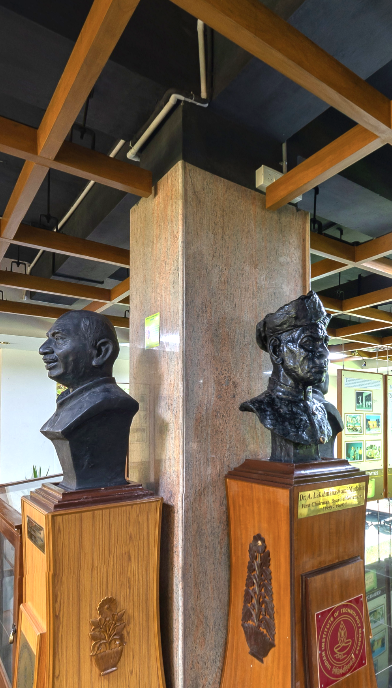
Dr. Vikram Rao in conversation with Prof. Mahesh Panchagnula
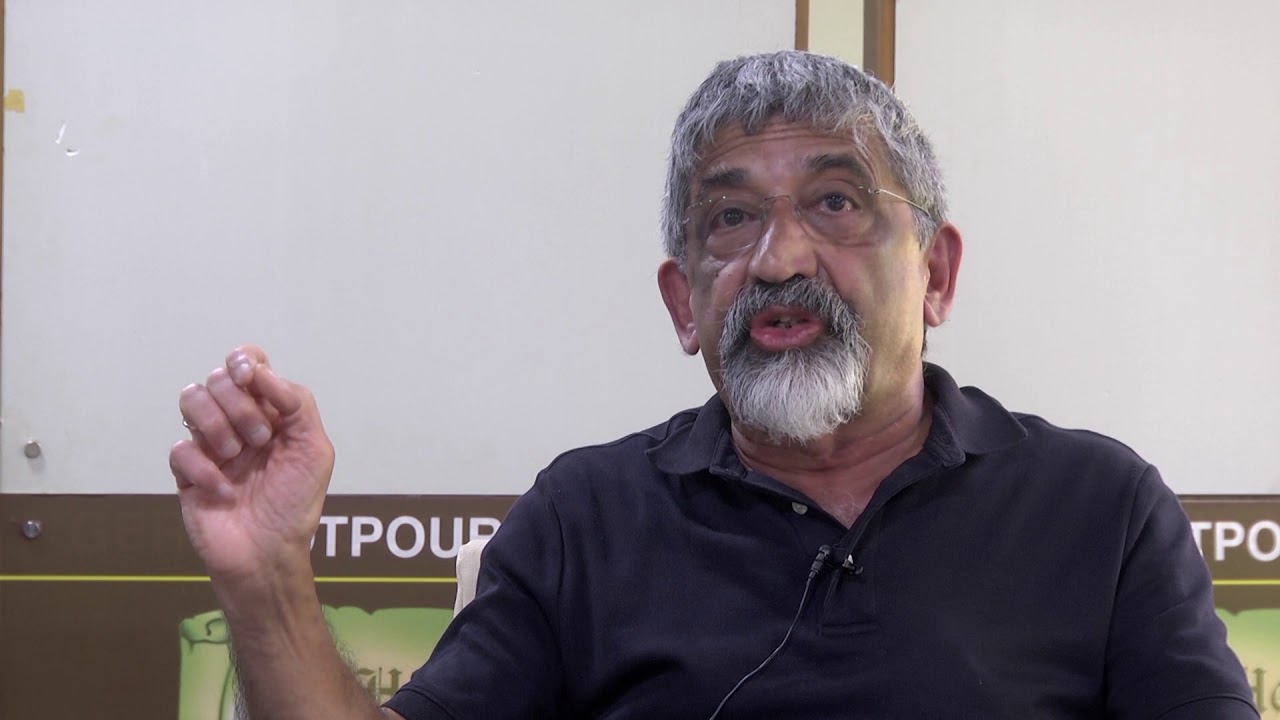
Hello, we have today ah Dr. M. Vikram Rao,
who is a 1965 graduate,
one of the earliest batches, in fact, the second batch.
So, Vikram tell us a little bit about - about yourself
and what it was like getting into IIT Madras
and describe the day you actually came in here if you can.
Well, in the back - back then we did not have a JET
the - the joint entrance exam
and we so, we all had interviews.
So, we - we were examined on the basis of our marks
and we had interviews.
And I still remember that my first interview
included Professor Koch,
he was a German Professor and - and
and he was - he was asking me what did I do,
what were my interests and I said gardening.
And I think he wanted to be sure,
I - I think they accepted something more erudite,
but they did not get it.
And so, he wanted some examples of - of flowers, okayay.
And so, I threw some out you know and then I said roses;
he said: Oh! Roses, when do roses grow?
So, I said: oh mostly in winter, all the year round, mostly in winter.
Later on, I realized
that that is absolutely the wrong answer for Germany
but it's the right answer for Delhi. [both laugh]
But I got in. [laughs]
Nice. So, which hostel did you live in
[Prof. Mahesh] and there was of course, only Cauvery at that time. [Dr. Vikram Rao] Yeah so, that's
an interesting one: we were the second batch,
but we were the first hostel residents of the campus.
So, we were all in Cauvery at that
time and we were - we had roommates
and then ... second year we - some of us shifted to Krishna
and the 64-65 rest of them;
the 64 people who were out in Guindy, they came.
So, we used to remind those first batch people
that as far the campus is concerned, we were the first batch.
Because we were the first residents.
And what was it like to go to class on the first day?
[Prof. Mahesh] Did you walk, bicycle what was - and what was it like? [Dr. Vikram Rao] Yeah,
All the classes were held at AC college
and central research lab
CRL we called it, I guess central research lab.
And - and we were taken in a truck and I - I thought that was neat
because we had these nerdy elite students
coming to AC College in a truck.
Oh yeah, I mean it would have been a completely -
they would be expecting somebody in an air-conditioned bus
or something, okayay?
[Prof. Mahesh] Yeah. [Dr. Vikram Rao] But we came in a truck with hands - slide rules in the hand,
it was fantastic.
[Prof. Mahesh] Nice. [Dr. Vikram Rao] Yes, it was very nice,
I mean it made you - brought you down to earth;
you know, that you were regular guys, not the select few.
Talk a little bit about classes at that time;
was it lecture, did you have discussion time in the class?
Yeah, so, the - the classes were - were lectures,
there was discussion,
there were something called surprise exams
which didn't last more than one year
because they were very unpopular
but I still remember one class...
see, there were no - there was no air
conditioning of course, okayay
and there were fans, but kind of depends upon
where you were and so forth and
I still remember Professor Koch,
the same guy who asked me the roses question,
sitting - standing in front of us in CRL in a classroom
and just perspiring, you know, his face was red, [Prof. Mahesh Panchagnula laughs]
his handkerchief was completely soaked to begin with
nd he was trying to - [Both laugh]
I don't know how these Germans survived our summer, but.
So, it was difficult to concentrate in that heat
with a little bit of fan that might be running.
Sure, wow, you came through with all of -
with all of those hurdles
and classes started booming into campus
[Dr. Vikram Rao] They moved into [Prof. Mahesh] here in
[Prof. Mahesh] your second year or third. [Dr. Vikram Rao] campus second year.
[Prof. Mahesh] okay. [Dr. Vikram Rao] Yeah yeah, second year.
And that would be BSB 105.
Yeah, it was, yeah and I think
of course, no AC yet as I remember, but there were good fans.
okay good - good.
So, tell us a little bit about the administration
that was running the campus at that time, the Head, Sengupto.
Yeah, So that was interesting, we were Madras campus,
Madras in those days, although we are still IIT Madras.
[Prof. Mahesh] We are still IIT Madras, correct. [Dr. Vikram Rao] [inaudible] brand, okayay.
You need to correct these people who say IIT Chennai
and yet, we had a director who was Bengali,
[Dr. Vikram Rao] which I thought was impressive, yeah. [Prof. Mahesh] okay.
And the - the administration was amazingly
tolerant of behaviour from us,
which was of course intended to be humorous
[Dr. Vikram Rao] but nevertheless sometimes borderline disrespectful. [Prof. Mahesh] Yeah.
And I - I still remember this very interesting
incident with Professor Sengupto,
who was the director and we - we had a strike, okayay.
Now, you know, rest of India, students strike all the time,
we didn't know how to strike.
okayay, and we were not able to consult the
the professional strikers, okayay.
So, our strike was for water;
I don't remember: not enough water or what,
but it was - it was water, and we didn't go to classes.
Oh that was your strike
[Prof. Mahesh] not going to classes was your strike, okay. [Dr. Vikram Rao] Yes, okayay.
So, Professor Sengupto came ...
and he - and - and he said, he was angry, okayay,
and he did not use a mic,
he could have been heard 2000 yards away.
And - and he said: "You people,
you think you are the cream of the Indian high school system;
you are not the cream, you are the scum, they both rise to the top". [both laugh]
So, of course, in the next issue of Campastimes,
I got Saha to do a caricature of Sengupto.
Well, he is Sengupto, but with a blue face, okayay
and he was stirring this thing;
he's saying "This is not cream, this is scum." [both laugh]
And then I wrote - I wrote a piece with it,
this is the closest I came to being dismissed -
Me and Saha, although I put him up to it, so, I could be blamed.
[Prof. Mahesh] Yeah so... [Dr. Vikram Rao] So, they put up with it, that's just the thing, okayay.
[Prof. Mahesh] Yeah. [Dr. Vikram Rao] They realized it's all in fun
and really...you know, anyway, they - they put up with a lot
[Dr. Vikram Rao] Yeah. [Prof. Mahesh] I'm sure.
[Prof. Mahesh] So, yeah you mentioned Campastimes, I think. [Dr. Vikram Rao] Yeah.
So, you are one of the - you were the - among the
founding group of students
[Prof. Mahesh] that brought this illustrous piece out. [Dr. Vikram Rao] Yes. So, I was one of them.
Yeah. So, Professor Klein who was a German professor,
who also had a Ph.D. in Sanskrit;
we got together and said we need some kind of
a published organ
and we came up with that - it sort of grew
... and the name came from a sandhi of campus and pastimes.
And so, it's called Campastimes,
people mispronounce it all the time but we cannot be helped with that.
And it was published - on a - Anand Singh Bava was the editor
and Diocesan Press published it,
printed it and Klein was the publisher, I think.
And ... we just sort of had fun;
we would - we would have these production meetings
when there - there wasn't - there was sp - blank spaces left.
So, one of us would fill something in and so, you will see there,
there are fillers with no initials on them,
that's usually, probably us just filling in the blanks.
And who - how did you go about getting the content to go?
I mean, was there a formal process or you just,
how many students were involved in it?
I would say, in terms of contribution,
total would have been about 15 students and
no, there was no method to that madness, yeah,
a few of us would ... and we came up with newer and newer things
when we ran out of ideas. So, Cup of - Over a Cup of Aye Aye Tea (IIT),
was somebody, I think Siddhartha who
got on that idea: Over a Cup
and then somebody said "Oh, IIT" and - and then divertissements,
which is so easy to write for.
[Prof. Mahesh] Yeah. [Dr. Vikram Rao] All of us wrote for divertissements,
[Dr. Vikram Rao] because that's just pure humour, okayay, you can just pick anything. [Prof. Mahesh] Yeah.
Just - it just grew ... there was no plan.
It was an - it was iconic at that time, I mean
copies would run out
[Prof. Mahesh] you know when they - [Dr. Vikram Rao] Copies would run out, because
we didn't really charge; despite it saying 10 naya paisa,
there were naya paisa in those days.
There would be piles that would be used
and people would pick them up;
yeah ... I can't remember but we probably put out
[Dr. Vikram Rao] 7 or 8 in the first year or something like that, yeah. [Prof. Mahesh] okay.
First year meaning, first year of its life,
which was I think our second year.
So, back to academics,
you were in the Metallurgy engineering stream.
[Dr. Vikram Rao] Yes. [Prof. Mahesh] Who do you remember -
who are the some of the professors who made a -
[Prof. Mahesh] an unforgettable impression on you? [Dr. Vikram Rao] Oh yes.
So, they were quite - but the - the main memory
is E. G. Ramachandran
and he was the Chairman
and I'll tell you a story about E. G. R.
it's absolutely apocryphal. I - you know - in fact, I am reminded -
I am - the similar story is told about ... Richard Feynman,
the Nobel physicist - that apparently he did
almost exact same thing
when he went to give a lecture course in Cornell,
although he was at Caltech.
So, E. G. R. came to us;
I think this is my fourth year
to teach us a course on Advanced Metallurgical Techniques.
He came: first day, he was sitting front of us, we were chatting
and one thing led to another and he said:
do you people understand quantum mechanics?
Now, what kind of question is that, okayay.
So, he then proceeded to ask a few,
nobody he knew enough to his satisfaction, okayay.
So, he threw his notes, threw his notes down
and he said: we're going to learn quantum mechanics
and he taught the whole darn course from here. [Dr. Vikram Rao points to forehead]
I don't remember seeing any notes, ever;
now might be, the memory is a little flawed after the years, okayay...
but amazing, this is like some sadhu sitting under a banyan tree
with 10 chelas around him and learning,
just experiential learning, it is amazing.
Very few people can pull that off;
you - you know - you'll have to have knowledge
in your head to do that and the desire to actually teach.
Yeah, those are the people that built IIT
[Prof. Mahesh] to what it is today in many ways. [Dr. Vikram Rao] They were,
[Dr. Vikram Rao] and there were many who did it in a different way. [Prof. Mahesh] okay.
I would say so, it's hard to know what is the
true foundation of a place;
but without doubt the true foundation of a place is the - is the
leadership at the time, which includes the faculty,
but also the administrative leadership. you know, Natarajan
told lot of jokayes, not all good,
but not all funny, I mean they were all good
He was our registrar, very young guy at the time,
well, lookayed young anyway.
Yeah, you know - that - it's hard to know what is a true foundation;
but I would say yes, particularly because it grew from scratch.
[Prof. Mahesh] Yeah. [Dr. Vikram Rao] okayay and you had to make up the rules as you went.
[Dr. Vikram Rao] Yeah. [Prof. Mahesh] The campus environment,
you've visited the campus several times since your early days.
[Dr. Vikram Rao] Yes. [Prof. Mahesh] What was it like watching the campus grow, if you will?
Well here is the thing, I was blown away when I came
to see all the trees; because when they built the hostels,
they must have had to cut down trees, okayay.
So, in the hostel area it was pretty barren.
No, in fact, it was all fields; there were no
trees in the hostel area.
[Dr. Vikram Rao] Ah so, I do remember that there was nothing there. [Prof. Mahesh] Yeah.
But now you see there are trees there.
So, I assumed that by some regulation you are
required to put trees back.
No, purely voluntary.
But the thing I was really impressed with
and I don't know if it's voluntary
or whether it was enjoined on you,
because this was a state park,
Adyar park or whatever it was - Adyar forest.
It was not enjoined.
[Dr. Vikram Rao] okay. [Prof. Mahesh] It was just a
[Prof. Mahesh] decision of the leadership at that time. [Dr. Vikram Rao] But - but the true impression I get
when I came back after many years is,
blown away by the fact that, by and large,
[Dr. Vikram Rao] you can't see the next building from one building. [Prof. Mahesh] Yeah.
And that some of these old banyan trees are still there,
it's difficult to construct that way.
So, it - there is no other campus like this you know, Powai,
the IIT Bombay people
say it is a sylvan campus, not really, okayay.
In fact, there is no campus like this
which has a true what we'd call sylvan setting.
And you would, how would you go - go out to
find some real life outside?
Bicycle; well, also, although there were 4 or 5 guys
who had scooters and motorcycle.
So, Bava had a scooter, Basu John Vetteth who has passed,
who by the way was one of the all-rounders, had a motorcycle;
Mahesh who has passed as well, had a scooter
of course, his family owned Bajaj scooters.
So, he had a scooter.
But [both laugh] sorry about that - that but it's true;
but the - but the - but the scooter and the people
were not obnoxious about it.
[Prof. Mahesh] Yeah. [Dr. Vikram Rao] I mean there were only what 4 or 5
they were really down to earth; some of them were wealthy,
but it didn't show, we rode the bicycle.
And you had to be careful,
because if there is a stick across the road, you avoid the stick.
Because stick that moves when you are wearing chappals -
an angry snake is not to be tackled with chappals, okayay.
So ... we avoided sticks,
just to be sure; some of those were really sticks.
[Prof. Mahesh] Yeah [Dr. Vikram Rao] But who wants to be sure. [laughs]
And the deer were getting used to the -
Ah, deer we were - we were - we were trained on that,
but several couple of guys got hit.
See the training was that if the - if you see deer
and they are trying to cross, wait for the last one;
wait, just wait okayay, because the straggler usually a smaller one
it's still going to cross
and then they have to cross over you. So, [laugh]
Yeah, how did you communicate with home back days -
[Prof. Mahesh] back in those days? [Dr. Vikram Rao] Letters.
[Dr. Vikram Rao] Letters; pretty infrequent letters, if you ask my mother. [Prof. Mahesh] Letters. You had a Post office -
and you'd communicate back.
Yeah - yeah and this is the interesting thing;
I don't know what any parents would have done in those days,
They - they just trusted to the administration, I guess.
Nice and what was it like to be in the hostel:
describe the hostel life.
[Prof. Mahesh] Yeah. [Dr. Vikram Rao] That Life, if you will.
Yeah, so, the - the - as I said, the first
year we had roommates in Cauvery
and then second year onwards, we had single rooms;
it - it was highly collegial, see part of the thing is
you are stuck in the middle of a forest.
So, you had 240
for the first batch students and the second batch students.
Yeah, first batch was 120.
So, our batch was 120 students, well, when we started,
there was some iteration;
but by second year, no,
I - I would say the first batch might have been a 110,
yeah about 230 or something yeah
[Dr. Vikram Rao] and then we were all there. [Prof. Mahesh] Added on every year.
But see, because we were the first residents of the forest -
which as I told you we reminded them of -
we were highly collegial.
So, the Campastimes thing had 64 and 65;
there was no senior/junior stuff okayay
in - in most of things like,
I used to be on some debating sort of things
and we were all together.
So, I don't know what any other campuses are these days
or how it is now;
but it was highly collegial,
people from all walks of life just being together.
I get the feeling that all aspects of IIT
grew together: academics, campus,
extracurricular activity, student growth;
I - from - from everything I hear,
I don't get this feeling of a sequential growth process.
I don't think we were allowed to grow sequentially,
[Dr. Vikram Rao] it all was happening at the same time, okayay. [Prof. Mahesh] Yeah.
And - okayay, you know, I like to say IITians are
not arrogant, just elitist okay and I hope that is even true.
But at least all of us are sort of fairly smart
and you got to figure it out, you can figure it out on the fly.
[Prof. Mahesh] Yeah. [Dr. Vikram Rao] If as an IITian you can't figure it out on the fly,
then who else is going to and I think we just
figured it out on the fly
and the faculty allowed us to and they did the same thing, okay.
See even the curricula, all the curricula was invented on the go;
for example, we used to have Workshop,
I mean, this is a disaster okay,
actual hard work, okay, some of it just - cold chiseling,
you don't even know what that means, okay [laughs] [Dr. Vikram Rao enacting the method]
So, this was - this a chisel, metal chisel, metal hammer
and if you went from here; you didn't get any marks,
you had to go from here
And then you had to hit this, you are not allowed to wear gloves,
so that means you learn.
[Prof. Mahesh] It builds personality.
It would build something, big fat thumbs is what it builds.
okay, and - and then you tookay this - this - this U-shaped object
and made it into a paperweight which is flat.
[Prof. Mahesh] Sure. [Dr. Vikram Rao] okay. So, I think this is, but it's a great leveler.
[Dr. Vikram Rao] okay. [Prof. Mahesh] So, you wrote a lot of caricatures for - for IIT Madras,
[Prof. Mahesh] I mean for Campastimes. [Dr. Vikram Rao] Yes.
So, name some of the people you caricatured
and personalities you remember from your days then?
So, actually I'm not sure that -
it sort of just happened;
usually the caricature - the early part is easy okay,
because you picked some of the faculty
that were interesting
and or some of the student body that was interesting.
But after a while, it was just if something happened;
then on basis of that the person got picked.
And - and so, what I would do is, I would go -
So, Professor Sampath for example,
who was a double E (Electrical Engineering) Professor;
I think we now have a Chair in his name.
So, the Sampath one happened is that,
he was just a larger-than-life person, okay.
So, he was an obvious choice. So, I went and interviewed him.
So, what I would do is, somebody who I did -
didn't know all that well,
I would interview them and just get some facts
and then fictionalize them [laughs]
[Prof. Mahesh] Nice, nice, nice [Dr. Vikram Rao] Yeah.
So, tell us a little bit about your convocation
the then Education Minister was your convocation speaker.
So, I actually came to the darn thing okay,
some two days; and the reason I am telling I came to it,
[Dr. Vikram Rao] because I didn't go to my Ph.D. convocation, okay. [Prof. Mahesh] okay.
I was ... actually, I came because we were a family okay,
that is why I came, okay. Yeah.
And nowadays I may or I may not come.
So, I don't remember much of the convocation
other than the speeches and that some of us got,
actually I got an award for this damn thing for some reason;
I did - it was all made up,
because how could there be an award for
Campastimes, okay?
No, no, I think it broke a path
[Prof. Mahesh] inside a forest called IIT Madras. [Dr. Vikram Rao] Yes.
I know, ... most
of what I remember about is just meeting them again;
see we left early, see you don't realize this.
See we - we graduated early because of the war, okay.
And so, we graduated I wanna say in February or something,
[Dr. Vikram Rao] but the convocation is at the regular time. [Prof. Mahesh] Sure.
So, there's a gap, so we all went home and then came back.
And so, it was good to sort of meet everybody.
So, what I remember mostly is saying goodbye correctly;
because when you leave, you sort of all scatter, right.
But saying goodbye correctly and seeing the place again
as an alumnus, it was - it was very cool.
So, I don't remember the pomp and ceremony,
I just remember the fact the family came together.
I think all - every student in the - in a
convocation would say exactly this.
[Dr. Vikram Rao] Yeah. [Prof. Mahesh] The pomp and ceremony is secondary.
[Dr. Vikram Rao] Yeah. [Prof. Mahesh] Describe what it was like leaving IIT Madras,
going back. Did you leave alone?
Did you have some friends go out with you - what was it like?
No, because I was going to Delhi in a train, okay
and there were only a few of us
and we didn't, no, we did not go to
I don't - no recollection of going with anyone,
because I think we were about 3 or 4 from Delhi.
See, that time because there was no joint entrance exam;
they deliberately had pockets from all over the country.
So, there weren't that many from any one particular area.
So, I don't have much of a recollection of - of the leaving part.
Very nice, this has been a fantastic interaction;
would you like to say anything?
Well, no I have - I would like to say
this is wonderful to have a Centre like this;
it's not often that your heritage is preserved
[Dr. Vikram Rao] in - in a way that is interesting, see this is the point. [Prof. Mahesh] Yes.
You can preserve in ways,
but it has got to be interesting to the casual observer.
[Prof. Mahesh] Correct. [Dr. Vikram Rao] And while I am not a casual observer,
I can put myself in the place of a casual observer
and say this is a terrific place and thank you for having it.
Thank you so much for doing this.
[Dr. Vikram Rao] No, no, no worries. [Prof. Mahesh] Yeah, bye.


- Contribute
to the Centre -
 Monetary
Support  Digital
Material
