
Prof. V. Radhakrishnan in conversation with Prof. M.S. Shunmugam
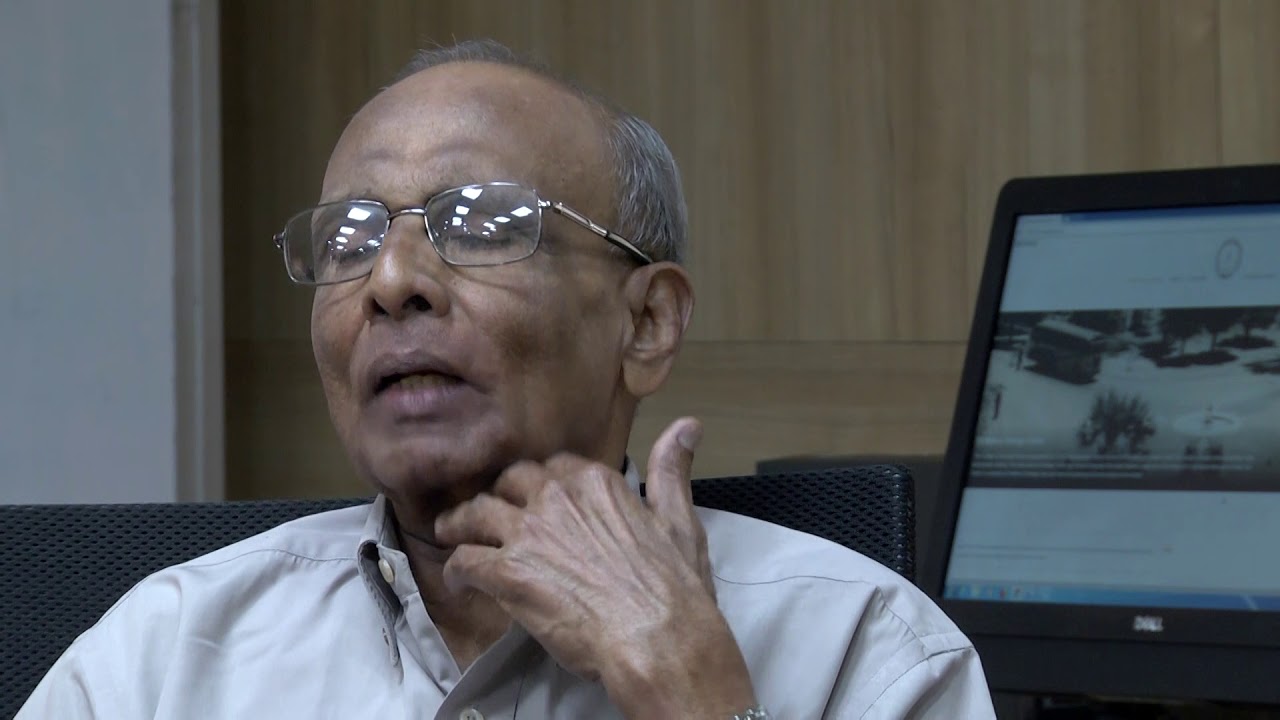
On behalf of a Heritage Centre,
let me welcome Professor Radhakrishnan
for this Oral History programme.
And Professor Radhakrishnan. Yeah.
Thank you for coming here.
Thanks.
Let us now start from the day one.
You landed here on this campus,
was it this campus or a campus in the neighborhood?
Do you recall sir?
I came and joined this place on 8th August 1964
and I came to this campus only because by that time,
many of the departments have already started functioning here and
quarters have started coming up
and the department was there in the IC engines laboratory
which is presently the one which has this lab.
So, I came first to the department,
introduced myself saying that
I have got an appointment here
and I am joining the department
and Professor R. G. Narayanamurthy
was the head of the department at that time.
So, from that point, I went to the administration
which was in the civil engineering block.
And I joined or rather gave all the papers and then,
formal joining report was also given,
that was the starting point.
At that time, there was no accommodation per se for me
because you know things were coming up.
So, I stayed with Professor Vaidyanathan at that time
for about 5 days. In the guest house?
No, in his own flat.
Ok. Because he was alone at that time so,
his wife was away at that point of time.
After that one, after 7 days you know,
I had to move out because it doesn’t look nice to
stay with a person having a family for a long time
so, I requested that I may have an accommodation
somewhere in the campus because
I was not keen to stay outside
because hardly anything was there away outside.
So, I went and met the registrar who was Natarajan,
R. Natarajan at that time
and requested whether I can be have any accommodation here.
Then, he thought for a while and said yes
we can give you a hostel room
and I was allotted one at Ganga hostel at that time. Ganga.
That just it has been built up hardly anything was there
except that the building and I mean
the bricks and other things were lying around it.
So, I moved to that place with lot of mosquitoes
there and it was just coming up and that was a horrible
experience to stay in a just a newly built up hostel.
There I continued I think about one and a half months or something like that.
By that time, the Taramani House was ready and
fortunately, for many of the young bachelor faculty members,
it was decided that they can be allotted a room there
and the name of Taramani House was not there at that point of time
and it was called Officer’s Hostel.
The Taramani House name came because thus registrar
suggested that you know we have the Taramani village
from where this institute
came or rather that part of the institute came from that one
so, it will be appropriate to name it as Taramani House.
That’s how Taramani house came into existence.
So, we stayed there, that was my first. Was there any messing facility
or you had to cook on your own?
The earlier times there was no messing facility,
we used to go to the Narmada or Tapti and then, have it. Oh, ok hostel mess.
Hostel mess and the that was there,
but then, we insisted saying that there should be about
I think about 15 people were there, faculty members were there
and the rest of the rooms were used as guest rooms.
So, we had a one wing or something like allotted for us
and we requested that there should be some
boarding and lodging arrangement should be there in that place.
So, it was accepted and a cook was also
allotted and with one or two servers
and that kitchen was serving only for about 15 people
at that point of time.
So, that was the initial stages of that.
Do you remember the director who was
there at that time when you joined was it? Yeah.
Professor Sengupta or Professor Rao. Yeah, it was Sengupta
who was there at that time because
in fact, you know I think I at that time,
you know it was easy to meet the
director because hardly there were not
many people around the campus who were in the academic side.
So, I also met him earlier and then, because
I came without an interview here
because I was a technical teacher trainee at Kharagpur IIT.
So, he said of course, I got the
appointment order from the IIT Madras,
signed by the registrar and requesting that you know
you can come and join and that is why I came here.
But then, I was given a temporary appointment at that time
because it was not a regular appointment through an interview.
So, they said that you will have to face the interview
within about 4 months time.
So, the I was interviewed in December. At that time the
Board of Governor chairman of the Board of Governor was the
HAL chairman.
So, the interviews were conducted in the HAL Bangalore, Bangalore. HAL complex.
So, I remember one evening there was the only the
Madras Bangalore Mail was there so, you
take that one in the early morning you reach there
and then, you had to freshen up, you know there was no
hotel require I mean there was nothing you know for the
salary, we got you know you wouldn’t have been able to afford
to any good place. Stay in any hotel
so. So, we went to a I went to a small place
where you know I had to have a bath and then,
took a bus to the HAL complex
and the interview was conducted.
Registrar was there if I remember correctly
of course, director the director was there. R. G. Narayana Murthy.
R. G. Narayana Murthy was there,
A. Ramachandran was there, I don’t know where. A. HAL.
A. Ramachandran. A. Ramachandran as an expert.
Oh, I see. And the chairman was there;
I think these were the 5 yeah.
Then, of course, other than that one,
the questions were simple because
one question I remember, I remember all the questions
because I could answer it easily. First interview.
Easily. So, thereby the first question was you know
if I take a sheet metal and draw,
what will be the deformation coming at the bottom?
So, can you tell me? That was the done,
I mean that question was asked by the chairman
because he is in the HAL and. HAL.
So, I said nothing is going to happen,
you can put a grid and draw it and
see that the grid remains there
so, that was through.
Then, A. Ramachandran asked me can you tell me
how a pneumatic gauge works?
It was easy for me because I have been teaching metrology
right from the start of my joining here,
next day was after two days I started teaching that.
So, that also was easy for me.
So, thereby after that one, there was no other questions
I remember and then, when I came back here,
Narayana Murthy congratulated me
and said that you did a very good job.
So, that was the happy moment in my life.
So, was the metrology lab established at that time or. No, at that time there was no metrology lab,
it was done in the IC engines lab.
But you had. No, the history of my getting into the metrology is a
very interesting anecdote because
no one wanted to take metrology
as a subject because it was there,
it was a mistake in the curriculum because in German universities
they have got a subject called MES technique,
what they meant was overall measurements you know.
Pressure measurement everything all the things, All kind of things.
but unfortunately that terminology was
translated as metrology of course, mean no harm in done, but
it was confined to metrological part of it
namely the length measurement and associated one
and this was handled by Professor S. Ramani,
who was in the IC engines lab.
And because he was connected with the MIT earlier,
they had a instrumentation area there so,
he was allotted the metrology and the metrology. Is the same Professor Ramani
who became NANO? Yeah, NIT
no, NIIT.
NITIE Bombay. NITIE Bombay. Ok.
So, he was looking for somebody who can be handed over this stuff.
So, I when I joined and knew that you know I am in the area of
I mean at that time it is called production engineering,
he said why don’t you take it up.
So, I mean I mean youngster who was coming and a
new recruit here,
didn’t have much of a choice rather than saying that ok,
I will do it and I started getting into the lab.
Then naturally, once you get into the lab
you had to take the classes so,
classes were also allotted to me.
So, I started right from 64 maybe in the second semester
no, 64 little bit of classes were taken,
but in the next semester, I took tool design and other things.
It was interesting, and the students were very very
Can you remember how many students are there
in your class at that time?
It was about 45 or something like that, 45.
it was a very compact class,
and they were very very brilliant you know Sidhu,
Gurcharan Singh Sidhu was the
gold medalist was a student there
and. Now, our class strength are 180.
Yeah, I know it is I know I grew with that numbers.
So, effectively they had a very good rapport with the
faculty and I enjoyed teaching.
Although, you know I was not quite comfortable in the very beginning,
I should frankly say that you know I had to read
a little bit of stuff before coming to the class
and there were not many
good textbooks or anything like that of course,
the metrology itself was primitive at that time.
So, it was very difficult to convince somebody
that this is a very important part of engineering because
the technology was such a low-level,
but it went on and I just built up my
career out of that one so, there was no difficulty.
So, now, looking back you think that is a very very good
step taken to start with the metrology. Yeah, I mean.
Looking before looking back you know you should say that you know
when I took up this area,
I mean it was a I mean a number of incident took place you know
how I got stuck into that area.
I took a class, that is one thing,
but I was not very clear about
whether I will continue in that area forever.
So, at that point of time, there was a requirement
that you should also do your Ph.D. work here.
Because there was no other option
other than doing the Ph.D. here itself.
So, I had to register and then, I thought
I will register at that point of time, but there was
in the very beginning, there was no one there.
I joined, after Professor Vaidyanathan was there,
I mean he was the first one joined the department of
the present area of manufacturing.
So, he was there, the second one was me.
And Professor Venkatesh who was there for a period of time,
he joined after me, only after about 4 or 5 or 8
I don’t remember you know in any case it was after me.
So, after he joined, he was the only person with a doctoral degree.
So, he asked whether you are interested in I mean
we had a conversation and then, I said I will
take up a topic for my doctoral work under you.
And there were not many people who are doing Ph.D. in fact,
actually I was a second one to register for Ph.D. here,
second or third and the registration took place
in the office of the director
and there was no coursework requirement
because there were not many courses
at that time the PG was not there.
So, it was not that strict
saying that you have to have these many. So, director himself will chair
those meetings those days Yeah,
he was chairing and then two. Now, we have deans.
Yeah, deans and then, gradually everything
came down to department level or so. Yeah.
So, that was the and then, I registered for the Ph.D.,
but that wasn’t metal cutting area.
Then, when I went to Germany in 1967,
there were other issues which came up so.
And I exchange programme no was this so.
First that is another interesting one because you know
after joining here, I was there for about two and a
half years I mean not doing much in research
also just I started working on it,
then moulding some tools and other things.
To get a mould, you know it was not easy
so, there was some geology,
I remember his name is Muttiah or somebody,
who was in Civil Engineering
and he had a moulding machine
with polymers and I mean the plastic ones
because they used to mould stones
and then, polish it out that was the only thing which were very.
So, if I want to study the cutting tool you know. Microstructure.
Microstructure or even the tool
where and other things you had to mould it and see with the microscope
so, I went there and then started
moulding certain small things and other,
these were going on.
Meantime, the second Indo-German
Agreement was signed by the department I mean
the institute as well as the German authorities
and all of a sudden I think by that time,
you know we had one German professor with us
Professor Lohr he joined. Professor Lohr,
if I am correct machine tool expert. Machine tool.
He joined some time in 66 I think,
he came in 66 June or somewhere and then, he was there.
So, those who were connected with the German professors,
the labs, they were asked to send the names of people
who can be considered for selection to Germany to do
research or further studies.
So, from our department, myself and
Vaidyanathan were selected
and other departments I don’t remember
and one Saturday or Sunday
morning, we were asked to come suddenly, I mean it was all
of a sudden it came up and
we were asked to come for a interview and it was conducted in the
humanities and sciences block
and all the German professor who were there at that time
maybe about 8 or 9 people were around addressing
and the I mean the director and
the registrar were there.
At that time the registrar was Sethunathan.
Oh. By that time. By that time Natarajan retired.
Natarajan retired and Sethunathan had joined
just he joined I think at that time.
So, there you know the questions asked you know why are you
going and have you started registered for this you know
and all these things were there
so, I was comfortable with that one
because I had already registered and even
Vaidyanathan had also registered so,
there is no question of I mean denying anyone.
And I used to play tennis at that time also so,
there was a Professor Stahl
yeah, Stahl in IC engines,
he used to come and then play also with me I mean with others.
Then, he asked you know do can you tell me the name of a German
a tennis player who is doing very well?
I couldn’t remember that one at that point of time.
So, he clarified that one, that is the one which I remember now.
Then, the interview was over and then,
after the interview what happened I think
that day was Tamil New Year’s Day or Vishu or something like that.
So, Vaidyanathan told me why don’t you come home and have lunch.
So, we went there and had lunch and then,
I came back to the Taramani House and stayed on.
The next day morning immediately, there was a
call from the registrar’s office
saying that you know you have to give your all the details for
further processing of your application and a note was
saying stated gave I don’t I think it still
it is lying in my file somewhere
saying that you have been selected for German
Exchange program. Exchange program.
And tomorrow, you have to give all the details
so that the passport and all things can be arranged.
Unfortunately, Vaidyanathan was not selected,
I was selected and it was a
dilemma for me you know how it happened I don’t know,
but I was selected so,
I put it up that was about April end or something like this.
Then, things moved and then, I gave all the things
and it started like this and then, I went.
In 65 or 66? 7.
67. 67 August.
Actually, this was in 67 April
that is and then, I the
procedure was over by about April end or May.
By the time, the metrology lab was established in the
place where it is right now, or it was. Yes,
that is a again interesting you know when I joined here that was the
a lab of course, both the labs were there namely the
machine tool lab and the metrology lab were
buildings were there, both were totally empty,
nothing absolutely nothing and in the machine tool lab,
there were big cases of
machines just not opened out.
They were all just lying at different places.
That must have come in the first phase of German aid.
No, this one that is that it has nothing to do with the phase,
but you know the original starting point itself, it was there. Starting point.
Exchange program was a second phase.
So, the in the first phase a lot of equipment came.
In fact, metrology also had all of equipment,
but they were stored in a air conditioned single room
because air conditioner was very
very rare at that point of time and then,
there was one single room which was air conditioned
in which all the metrology equipment’s were also kept. End up.
But dumped and metrology lab just a plain structure.
So, one good thing I could do was that
I learned how to erect machine tools.
Opened out everything so, there were
lot of things you know which was going on how to
put the foundation bolts, keep them there and then, cure them,
all those things that level the machines.
So, these things were something which you wouldn’t have
learned out of your academic work.
So, that was a learning experience which I enjoyed
and which did definitely gave me an advantage
in the sense you know I could explain things
in more clear terms because I have experienced it.
As far as metrology was concerned, it was an empty this thing
and no one was responsible at that time because of
the fact that I was taking metrology, I was being asked to
start the work by taking some of the
equipment which were lying there and initiate the lab.
There were no table so, first thing is to
order for tables and the tables were only made
in our own workshop.
So, it took some time, but you got a few tables
and stools were given and
once those tables came,
we opened out that place and get got all those few equipment
and their booklets connected with all these things
so, started reading because we never saw these equipments
in reality anywhere else at that point of time.
One thing I should say that the Germans supplied the best
available stuff there which was again
seen in their own institutions.
There was nothing called a low-level technology
being transferred, it was all
Whatever they had they. on par with them
and thereby, what we got is, what is was there
when I went there I could see the same thing
there and there was no difference.
So, I started on I mean opening these packets,
learning what are the things to be done
and adjusting and then, putting it.
Even now, I remember there was one person called
Chandramouli at that time,
who was an STA senior technical assistant.
Me and Chandramouli used to be connected with the metrology lab.
Professor Vaidyanathan and Venkatesh were
in the other place. Machine tool lab. Machine tool lab.
So, both of us used to come in the on Saturday,
Sundays and other thing because that was
only time when we can erect this machine.
I remember the profile projector getting
into this and fixing up the mirror and things underneath
and then, adjusting all the lenses and other things
so, it was a good experience.
So, by the time, Professor Prithviraj
and other people have joined the department? Prithviraj was there much earlier, Prithviraj.
So, do you have a group photo of this you know?
Yeah, that you know when it
so happened that you know in 1965,
I joined in 64
that batch was there 64 and 65 they passed out
so, in I think April or somewhere I am not very sure the month,
though I didn’t teach that group because it they were seniors,
I was invited as a member and we had a group photo which
perhaps. Let us have a look at it,
probably you can, recollect much more. Yeah.
This is a group photo of the mechanical engineering department
with the students in 1965.
You can see that there are number of
German professor s sitting there each one heading a particular lab.
I can easily remember.
It is a entire Mechanical Engineering Department.
It is a entire Mechanical Engineering Department. But not all the students
are here 45. A few of them are not there.
Because the 45 was the later ones. Ok.
This is the senior, whom I taught is about 45,
but these were initial. Much ahead of them. Yeah,
I think this is the second batch or something like that. Right.
So, thereby you know the numbers were
very much little. Can you tell the central figures are with the tie?
Tie is the I mean he is the I mean he was the.
Director. Director at that time. Professor Sengupta?
Sengupta and Natarajan on his left side. Ok.
And Professor R. G. Narayanamurthy on his right side.
And if I take from the other end,
his name is was Goetz who was in the foundry
and Professor Venkatesh, then Ebert who was in the
In the workshop. workshop,
then Professor Heitland combust engine lab,
Professor Scheer turbo machines.
Of course. Then, coming to this side, Professor Stahl IC engines,
Professor Lutz thermal heat transfer,
Professor M. C. Gupta. Who was in the combustion lab. Combustion.
Then, Sohre I think is in the electrical shop
and last one is Hassenbein who was in the machine tool lab.
He was a very very nice guy who used to,
I remember when we went to Germany,
he came all the way, he was in the Germany at that point of time
in the vacation time
so, he came all the way from his hometown
to the place where we were having language class
and bought some cakes and other things.
So, it was very very.
So, you picked up German language after going there?
No. do you have any. Because of the association with the German
universities earlier itself, there was a tendency in us
to learn German though we didn’t plan it out
like that because we never thought that we are going to
Germany or anything, but you know because Germany
was connected with then some of the literature available
were in German so, there was a tendency for us to do it and
Goethe Institute was there,
Max Mueller Bhavan at that time and it was
in the mount road just opposite TVS .
So, I registered for the course Grundstufe that is the basic one.
First level course. First level,
but I was not a good student in German language,
I passed the first one, the second one you know,
I wrote the examination, passed, but in the
viva or rather oral examination I failed, So.
So, they normally play a tape and ask you to write it no. No,
they ask questions, and you have to answer it in.
Oh, in Germany ok. Yeah, German and I couldn’t answer it
very well with the correct grammar.
So, I can say that one and a half classes,
the first one I completed, the second one partially only I completed. Partially.
And this was a background with which I went for the interview.
So, they were happy that at least you know I could understand
little bit of German and that was an advantage one.
So, that was the thing and at the back side,
the second row, you got all the faculty members
and a few students at the end.
The third one from the right is Professor Lakshminarayan.
Then, I think this is Krishna Murthy,
I don’t know I forgot, then Rayudu is there,
Prithviraj, Padmanabhan who was.
In precision engineering. Padmanabhan, Precision engineering yeah and he joined.
This person I don’t remember,
that the next one is me, then Vaidyanathan,
then Thyagarajan. K. V. T,
K. V. Thyagarajan. K. V. T, Padiyar.
Professor Ramani, this is applied mechanics Subrahmanyam.
And he is, Mallan?
Malan, Govind Mallan. Govind Mallan.
And others are students.
Ok nice, nice to see them.
Yeah. After long time.
So, coming back to this you know I you degree
you got in German, Germany itself or you were?
The idea was to do the research work in Germany
and submit whatever you do for your doctoral programme,
but then, when I went to Germany,
I couldn’t continue with the topic though it was informed to the
professor concerned that I am likely to be working
in this area because he has initiated some work here.
Metal cutting area. Metal cutting and.
Associated. Associated, cut toolware or whatever might be this thing.
So, when I went to the German University for
from which was allotted to me the immediate technology
a Technical University at Braunschweig,
I met that professor who is a very good expert in grinding
of course he is not in metal cutting but grinding.
So, he asked me to come when I was doing my
language programme which was for 3 months,
in between I went and met him.
There was a I mean the distance was about 300 kilometres only
so, I morning I went and then came back in the evening.
So, he I went there and then met him of course,
naturally he talks only in German
so, I could just manage German,
by that time I picked up little bit.
So, with little confidence I could manage
and I could understand him very well,
but expressed my desire
that you know I have done this one, I would like to
continue if possible because it will be easier for me
to complete it within one,
at that time I got it only for one year.
Then, he said you know I don’t have any facilities for these things
you know electron microscope is no not available,
certain things which were required was not available
so, it will be difficult for me to provide you these things.
However, you can work in other areas and
we will discuss with you, you be there,
when you come back, we will discuss.
So, I went back to the language school and then,
came back and after one and a half months
and went back to the institute and discussed with him.
He said you go there and observe the facilities there,
we will discuss because the professor is quite busy there
normally, you know you won’t be able to
meet him as and when you want.
You have to inform, the secretary much earlier maybe one
at least about 3 to 4 days before that.
So, I was told that you know you can
I can spend some time looking at the facilities available
and the facilities available were mostly on
a grinding and woodworking.
Machine metal cutting was not there
except sawing was there.
Then, I was not very sure as to what I can think of,
then I saw that there is a new area which has
come up there, laser machining.
They had a very good set up, ruby laser they got newly one
and they started investigating
and if I remember correctly,
the new year greetings with each lab producers
to be sent to all the people,
they made a photograph of the laser cutting through
a ruby crystal with all the flashes coming red,
one a colour photograph was put
and that was the new year greeting from that the lab.
So that fascinated me
and on the turn of the year in the January beginning,
after the Christmas and other thing holidays,
I met the professor and requested whether I can work on that one.
Ofcourse, that was not possible he said because
we do have our own programmes planned for it,
but if he said you know you can work on some
fixturing of components and other things in the
machine that is you know fixtures and other things.
I was not very keen about that one because I was not
clear as to what could be the outcome out of that one.
At a young age you know, I don’t know
if I am given now perhaps, I would have thought you know
flexible fixturing or whatever might be,
at that time there was no idea about what I could do.
So, I was in a dilemma and first month
that month I didn’t have much to do
other than just go there and sit there and read
something and that was the thing.
Fortunately, Professor Venkatesh came there
and I told him that;
if I am going to be here, I cannot do work on your area
what you are given and I may not be able to do it in the
this field because it is a new one and when I go back,
I don’t know what I can.
So, he was kind enough to say that ok,
have you got any other option?
I said you know there is another professor just next to him,
next to this lab in a measurement area.
His name is Professor Weingraber.
If you can talk to him whether he can take me
it will be nice.
So, he went and met of course,
it was planned that he will be meeting him.
So, at that time, he said so and so has come here,
will it be possible because he finds that
you know there is not much
possibility of working in an area where he has been working there.
Then he said I don’t have any objection
provided the other professor agrees.
And then between them, they discussed and said ok,
this man said this I don’t have absolutely no problem,
you can go and work.
So, that way I changed over to the metrology again.
So, I whatever I was doing here, again I got in some
I mean it is a circumstantial.
Things happened. Happened.
So, I ended up in metrology and again, you know
in metrology, I don’t know what to do.
Professor told me that you know
one I mean after joining that department that lab,
I think the by end of January or something like of 1968,
he took me to the lab and again, showed me all the instruments.
This instrument you can do whatever you want
because no one is working. That is a surface finish machine.
You whatever you want because at the moment,
no one is working so, its free
that is all what he is told me
and then, you know he went back and then,
I sat in a room, they gave me one good thing
about Germany is that if you are joining there,
they will find a place to sit and work.
So, that is the one first condition. One.
For every professor to accept somebody.
If I got a space to make you sit there,
then only I will take you.
There is no question of a student coming and then,
roaming around and not having a place.
So, I ended up there and then, I started working in that place.
So, after coming back, you know you came back in 69?
60 69.
69th and submitted your thesis in here.
Yeah, I came back in 68th October end.
And then, I started writing my thesis during that 68 December to
January or something like and submitted the
thesis by end of January.
You remember your convocation day yeah?
No, I remember the worst incident
which happened just before by Ph.D. viva.
Ph.D. viva was announced,
Professor A. K. D. the external examiner.
Professor Weingraber came here because he was invited,
and he also is a examiner.
Weingraber came all the way from Germany Yeah,
because he there was a visit arranged already.
Right. So, when he came you know it was easier
and the day before the viva,
I another incident is that I got a scooter.
Luna. No, I got a Vespa.
Vespa ok.
After a long time that is you know 68,
I joined in 64
and the condition at that point of time that you will not get a
scooter, you can’t buy a scooter. You have to wait.
You have to register, and government allotment is there.
And one condition for the government allotment is that
you should be staying at least 1.5 kilometers away from your place of work.
So, if you apply for it, you have to give a certification saying that
1.5 kilometers away I am staying.
So, in 65 or something like that, I applied.
When I applied you know the assistant registrar or whatever might be,
he looked in and said no no, this is not
1.5, it is only 1.3 kilometers
so, your application is not accepted
because I was staying at that time in Adyar
that is another story which I have to say why I went out of the campus.
So, I stayed there and they said its only Kasturba Nagar
so, 1.3 kilometers.
I said you know from the gate itself maybe 1.3,
but within that this thing another kilometer is there kilometer.
So, that is not considered because your institute starts at the gate.
So, it is not the place of work
so, thereby you know it was not possible and then, it was rejected
and later on you know once I lost touch with when I came back,
I applied for it and at that time, it was little more liberal.
I got a new scooter and unfortunately, I took that scooter
of course, I got license everything
and went all the way to Mylapore to buy cufflinks
saying that you know I should put full sleeve and
put all the things and then, pretend myself as the I am. For the viva.
viva and I came back,
came back all the way and got into the campus,
I was driving back exactly at the Jalakanteshwara temple,
there is a road crossroad,
P. Sankaran I mean. Electrical Engineering yes. Electrical Engineering,
he was a very he was also in Germany, he came back
so, he was driving the scooter,
he stopped and then wished me and suddenly, he came and hit me.
And I was thrown out and I had a what do you call the dislocation here
and my nose was a little bit. Twisted.
Distorted and there was bruises and all these
and I was in the hospital here.
In the night, I just moved I remember
and the whole thing started got out,
terrible pain. Terrible pain.
Terrible pain and one doesn’t know whether it is a at that
time you know it was not giving any problem so,
people never thought that it is a broken shoulder or anything like that.
So, immediately I was rushed to the Royapettah hospital.
Fortunately, there you know the doctor came and then,
pushed it inside and said there is nothing,
X-ray was taken, and it is alright.
So, I came back again to the hospital.
The next day morning is the I mean maybe about
afternoon or morning, I don’t remember is a viva.
That time I understood many people because
some people said no, no, why can’t you postpone it?
I said no, if I postpone it, it is going to be difficult.
Because Weingraber is not there and they doesn’t.
So, I said you know I will manage because there is no problem
except that you know there are bruises and I may have to put
my hand in sling,
but there were people wanted to
see that you know it doesn’t happen I mean unfortunately, that is it.
Then, what happened was that doctor there
I don’t remember his name,
he said he is fit.
You can go and then, he has no problem except this one.
So, he can go there and. Medically cleared.
Cleared.
So, I came back and then, the next day with a sling,
with bruises here, with I mean a patches and other things. It was a real defence.
I defended myself without because
that that technology part was easy,
but with this one, I couldn’t write on the board,
but then, I put it and tried with the left.
So, that was a good interest interesting one.
So, you received the degree from
Professor Ramachandran. Ramachandran.
This the photograph sir? Yeah,
this the I am taking the certificate.
Who is reading out your name is it?
This is the assistant registrar, Rajagopalan. Rajagopalan ok.
And that is V. M. Radhakrishnan,
who is staying the next. Behind you?
Yeah, he. Ok.
He finished the earlier to me.
I mean earlier means you know he was he did it here
whereas, I did in. The venue you remember sir?
it is. It is open air theatre. Open air theatre, nowadays it is in SAC.
Open air theatre. It is a open air theatre good.
So, after getting your Ph.D.,
was there any change in your you know you said you stayed outside,
you know this is news to us.
Yeah, I was a little rebel at the age of 24-25,
rebel in the sense you know I was little I mean
anyone at that age will be rebellious; rebellious you know,
I calmed down very much and normally, I am not
excited or anything like that, but what happened was you know
the administration was very very dominating at that time.
I mean it went on for a long time you know,
if anything be done, you know it is the they will decide.
Faculty members didn’t have much of a what do you called as a.
Say. Say in any of these things.
This changed only when the deanship came, I could
guarantee that it was the only time when things got changed.
Otherwise, the registrar, assistant registrar,
they were all dominating.
One or two examples I can mention.
First thing is you know about my ouster from Taramani House.
There I mean I told you that professor I mean
the registrar Natarajan retired in 60. And Rajagopalan came.
No, Rajagopalan didn’t take I mean Sethuraman came yeah. Sethuraman.
Because the, the point of retirement they
wanted to have a sendoff to the registrar.
And they at that time, there was no nothing called
the catering or anything like that, you know you have to arrange it
in some place and Taramani House was chosen for that
dinner and other things, party. And
so, director, registrar,
there was a superintending engineer called Y. S. Ramaswamy,
then Professor Sampath and others were there.
And we were staying there
so, naturally, they said you all have to come for the sendoff.
You can’t have a separate dinner here and other things.
There was a much more rebellious person among
us Professor Ganguly, who was in humanities.
He said how can you say that no, it is not, he is not a
a faculty member, he is only a registrar.
Why should all the faculty give a sendoff to a registrar here.
So, I mean at that age, you know you feel you know yes,
yes, that is the right thing you know,
and we said that we will not go
and we will have our own dinner prepared by the same group,
they will also prepare for them, but we will also have it less.
I was also connected with the
mess arrangements in the Taramani House at that time.
So, I was asked to see that you know
our preparations are also made
at the right time and while they were doing it.
So, there was a little confront, it was not a confrontation,
but there was a. Some misunderstanding.
Difference of opinion and it went off without any problem,
but this the director and others didn’t like it.
Ofcourse, nothing happened for about this was I think
December or January or sometime, nothing happened till about April-May.
Just at the fag end of the semester,
once the institute closed, there was a letter to every one
of us staying in Taramani House that the
in I mean I don’t know the title, but whatever might be the authorities
have decided that Taramani House needs a fresh look. Renovation.
Renovation, fresh look and all facilities are going to be
looked in afresh and all people who are staying there
may have to vacate and those who are staying
there can be accommodated in a newly constructed
X-type quarters. There was nothing called X-type, it was the
E1 type the lowest one.
and it was named as X because it if you called E1, it is meant for.
The employee of the. Employees of the I mean of a certain level.
Different different cadre.
So, in order to circumvent that one, it is put a X quarters.
So, many of us said that we are not going to get in there
that only option is to get out so, I got out.
Interesting so, but you came back
you know within a year or so you know. You know I stayed almost for one and half to 2 years there,
by that time, I was a I mean the these things happened.
You know it is strange you know with all these things, I got the German
selection because I had the background of this type.
So, when I went there you know I thought you know
I am going to be doomed here.
But then you know I should appreciate that
Professor Sengupta was realistically because I got a
award for a price at I mean a paper at that time.
Institute my first paper was given the medal for that.
So, I sent a copy of the letter and at that time,
you know if you want to take any money from any source,
you have to get approval. Approval.
So, 250 rupees was the award money.
So, I formally put a letter and then,
perhaps he might have noted down whatever might be the thing,
he was positive and then, he decided to give me
a this scholarship without any
inhibitions of this type.
So, I was surprised.
So, after your doctorate you know, you must
have been promoted to the next level you know normally that's.
No, it was not automatic.
You have to again. No,
it so happened that there was a advertisement by about
January or something, at that time, I didn’t have a Ph.D.,
only thing I came back.
So, they wanted to fill up certain things
so, there was general advertisement for all the departments
and in Mechanical Engineering Department and in our means
group, there was a assistant professors requirement.
So, fortunately it was required that.
Ph.D.
A Ph.D. is required for applying for this.
Fortunately, I could complete my Ph.D. by February,
I think some middle of February or something I completed
and I had the provisional certificate
and this interview took place in April or something like that.
So, you were well in time. Well in time.
So, it was I mean it is a matter of. So, those days only three cadre lecturer,
assistant professor and professor. Yeah,
I mean initially that, but in between it came associate professor. Yeah,
much later much. Not much later,
by the time I was about to be
I mean getting into the I mean see
I took how many 6 years after joining
to get into a assistant professorship.
Mind you that 3 years I had a experience at. The previous.
IIT Kharagpur also so, Kharagpur.
almost. Was it sponsored by IIT Madras?
No, that was Government of India’s scholarship. Scholarship. Yeah,
that was I was selected all India and then, I went there.
So, after that one, I joined this place
and after 6 years, I got the promotion in 1970
and within about 2 or 3 years,
the new cadre was also there associate professor.
So, if at all I could get a promotion
that would be only associate professor at that point of time.
Then, I applied for the Humboldt Fellowship
and I got it in 75, I was in Humboldt for 1 year there in Germany,
came back, then after 1 year only the advertisement for.
Professor. Professors came,
I got in. So, in between if I recollect,
you had three MSs with you at that time in 70. Yeah MS.
Can you recall who are the MS's?
M. S. Selvam and you and I think who is. You had a Fiat car
with the MSS registration so.
Yeah, that is the thing. You sold out that car.
I sold it out to M. S. Selvam.
Oh, I see yeah right.
He wanted that car.
So, I when I said you know I am selling it, he said no,
I would like to buy it and then, I gave it to him. Ok.
So, then in early 70’s, know you also organized an AMTDR
conference if I am correct. Yeah, in 1970,
I organized the first AMTDR conference.
Maybe the first. The, the It was a third conference in the series.
But in IIT Madras, the first one. First one
and the earlier one was in the next earlier one was in IIT Bombay.
So, Venkatesh was there and he said you know we were going to
organize this thing so, you can be the
organizing secretary because I was only one who was
coming back and by the time,
Philip and Vaidyanathan gone to Germany.
So, they were not here so,
I was the only person who was available here
so, I took the responsibility as the organizing secretary.
And it was a very good experience for me
because collecting money from different sources,
then arranging the we did a very good exhibition of machine tools.
Very good exhibition because.
If I remember, I came from College of Engineering, Guindy. Yeah, because you know a live; live.
To see the machines you know it was in Guindy. Yeah, it was a live one
because power was given to this and then,
temporary arrangement were done and about
20 30 machines were exhibited there
and that was a good successful conduction of the AMTDF.
So, if I am correct, you also were JEE chairman in, no 76 77. No, 76 I became a secretary.
Secretary. I didn’t I mean then,
that 77, we were the organizing so, 76 and 77, I was the secretary.
So, in 1977 IIT Madras was the organizing institute
so, naturally, all the responsibility was there with I mean with us
and the chairman was what is it physics person, Ramasastry. Ramasastry
Professor Ramasastry and vice chairman was Mahabala.
because we were started like what do you call as
computerizing the list and other things at there
because we had the IBM 360.
So, Mahabala was once the application comes you know
you give all the details and the computer shows all the
details and then, print out comes out and other things
and false numbering, all these things were done there.
And then, conducted the this thing. But if you remember,
this is not online like nowadays. No, no.
It used to carry cards for each candidate you know card, deck,
a deck of cards. Yeah, I mean in the computer.
Computer, because computer can only Yeah, computer system was very tough.
read cards Yeah,
so. it was very tough, you had to print out all the details and give it
there and then sort it out. And check manually.
all the things and check manually and there were.
One major mistake was done;
I no one knows what it. I know it, but then,
I didn’t disclose it except the head of the department
and perhaps the director.
What happened was the I mean I won’t tell the names and other things
because you know. Names you can suppress.
I mean I was the sole authority as far as the
list ranking is concerned you know, it was done here.
Ofcourse, sole authority means I know what is being done and the
ranking is done by the computer.
Once you have the evaluation, then the marks are fed,
once again checked, there will be scrutiny everything is there
and then finally, the merit list comes out of there.
And two merit list are there, one is a main one,
other one is a reserve category, at that time it was only SC and ST.
Just before the day of announcement of the results in the media,
with a list of names and at that time, names also were put there,
suddenly we noted that one person who belong to
the ST or SC group was in the main list.
Main list he won’t get in.
But in the other list, he would have been the top almost.
Then, only I found that this has been wrongly put in the. In the main category.
In the in the while entering the all the things because we cannot
check because there are scrutiny, everything is done
and it got into that one.
Then, I found you know ok, this is alright,
I can look in and then inform saying that this is to be altered
and there was a classification but
are there anything else which is lying like this.
So, we had to go through all those who got into this one
and verify each and every one to look. Manually.
Manually verify that no incident of this type
has come in the main list.
So, that night till about 3 O’clock early morning,
we did the whole thing and said that ok,
nothing except this one and informed Professor Narayanamurthy,
who in turn informed the director
saying that this is the one.
I remember it you stay came with the deck card. Yeah,
that is in Bombay. To IIT Bombay.
That is. Where I was working as lecturer,
that is why. So, that was a incident which I really
I mean it was a I mean things would have gone wrong. Right.
But fortunately yeah, at the right time,
somebody intertwined and. The mistake was predicted
and then, you said you know deanship
and after deanship many things change.
You yourself were a dean. Yeah.
If I am correct, took over somewhere in 85. Yeah.
And I remember and then, you are functioning from
the civil engineering department. Yeah.
So, how is that you know this new building was created,
was it during your time or when?
Yeah, I was I mean as a dean of course, I had the
different roles in the institute because right from the
early days you know, before I became dean,
I was a advisor. Cultural.
Cultural and advisor I mean placement and training,
then I was a chairman of alumni association
so, all these things were there.
So, I had little bit of exposure to
the people around so, there was not much of a difficulty for me to
take up a job like a deanship.
And when Professor Srinath called me,
requested me whether you can take up this one,
because I think the earlier dean was
Kuriakose I think, no Mahabala,
Mahabala was handling that IC and SR.
So, he said the you can take from Mahabala, Mahabala will go to
dean of research or something like that.
I was not very clear as to what ICSR area will be because
in at that time, the consultancy and other things were very very limited. Minimal.
Minimal and then, things were not looking so bright and other things.
So, anyway, it was given and then, I accepted it and then, took it out.
It was there office was there and only thing is that it was
an air conditioner room because normally,
even the head of the department didn’t have it
so, that is the only comfort we got it
because the average room without much of a major
sophistication or anything like that and that was the place.
There of course, we could implement certain things and
then, I may say that you know things improved considerably
during that period because we planned out certain things,
one is that of course, at that time,
there was no internet or anything like that you know
where you can have online access to what is happening so,
we made a number of booklets which covers many of the activities
concerned with the different departments.
Then we started a newsletter every month,
we used to give it to the industries
that was called NewsTech news on technology.
Then, then we started industry associationship
whereby the industries can become a member
associate member of the institute
and it was gradually increasing to 150 or 180
industries joining there. You were also conducting refresher courses.
I mean that is called TAP that is technology appreciation programmes. TAP.
So, these were all put up thereby you know the institute
had an exposure to the industries
and that went on like this and I mean
personally, I was responsible for the
research-based consultancy RBIC. RBIC.
Which was not there because I found that you know
consultancy means existing knowledge be...is...tried. Mostly testing.
Testing and the existing knowledge the foundation;
I mean structural, this thing you know, where you know. Routine, routine thing.
You do the calculation, give it out.
But then, there was a gap there you know
an industry want something to be done and it
is not available with as a knowledge
so, you generate that knowledge and then, do the
solution to or give the solution to them that means,
there should be a research and a
consultancy based on that research.
So, I thought that in it would be good to have a
separate category called this research-based consulting.
It was a risky because you know one doesn’t know how the
industries are going to put money for this one
and of course, the division of the money and other things were
planned out reasonably attractive for the
persons who are because earlier, sponsored research
didn’t have any remuneration for the.
Even now, it is not there.
So, here you know if you take this research, you get
little bit remuneration also so, thereby
the faculty members were little more attracted towards this one.
And the first one came from I think.
Ennore. Yeah, Ennore that one,
that was the first 37 lakhs or something like that
I don’t remember. It is a huge money at that time.
Yeah, at that time, it was very huge and then,
gradually it picked up and it is
now earning more than the consultancy now.
Interesting I thought you know it was existing.
No. But you are the first
person to introduce RB. Yeah, I did the whole thing.
We call it as RBIC. RBIC.
Yeah right. Even then that name also I was given
and I made all the forms for that one personally,
not even to given to Balakrishnan.
I remember I did the whole thing in the computer myself
and then, handed it over and then it worked. When did you move to this
now building was it ok? No, I was not moving out at all
because. It is a next you know. What happened was one day
Balakrishnan who was the. Chief techno.
Chief techno economics officer told me
sir, we have got almost 80 lakhs in our overheads.
If you don’t do it somebody, will going to take it out.
So, I said you know what we can do?
Then, we discussed for a short period and said you know
why can’t we have a separate.
Building. Building for ICSR because it is going to expand.
Then, it was not very clear whether somebody may
accept it or not so, fortunately
what we wrote a letter
stating that this is the condition,
this it is essential to have a place where
interaction with the industry can take place, we got the
technology appreciation programme
which can be conducted so many things were there so, you put it together
and gave it to Professor Swamy who was a director at that time. Ok.
So, he didn’t have much of a objection to it.
So, he put it up in the board of governors and he got approved.
So, I got approval only.
By that time, my term was over. But you initiated
Initiated it yeah yeah, the process, that is more important.
I got the approval and also, the location I told. Ok, right.
So, these two were done by me, but afterwards,
Professor Raju was there, and he constructed. Do you remember so far in your
chairman of alumni association,
we also tried to have a separate office.
We were operating from different labs.
Yeah. We didn’t have a formal office for alumni.
Yeah, that was the training in placement was the only place
where it was done. Yeah. It was not there.
In. When I was there, it was not there because
what we tried our best you know. I remember
we. I was secretary for your,
not secretary or treasurer. You know what when was you know at that time,
we started sending letters to many
alumni with the addresses available
and almost 80 percent came back
saying that the addresses are not I mean
I mean available, addresses are not available.
So, that way you know it was not a well-functioning alumni association
and things have improved because the contacts
were established later with the. Now, they have an office,
exclusive office. No, because internet has
made the whole thing different.
Earlier you know you had the address list
which has been given by them when they joined
and parents address have changed, everything is changed,
it was impossible to trace them and
that was the thing and then, systematically is
gradually improved, today has become better. Gradually.
Then, down the line, you are also head of the Department of Mechanical. Yeah.
And in between the lab name
change you know, our section name
it was machine tools and production engineering. Machine tools and. yeah.
it was changed to manufacturing engineering.
Do you have any reason for it or.
There were two-three instances where you know
we wanted to have a wider because the number
see in any group, the number counts.
If you have got only 6 people, 5 people it doesn’t survive
that was the case with precision engineering.
I told that you know if you have got 4 people or five people,
it is only a question of time.
I mean it will vanish one day because you know you would not get
people unless you do a lot of work so that attraction comes then.
So, my idea was I mean at that time itself, I told
the industrial engineering was there
they were. There was the proposal to come
by industrial engineering with manufacturing. Yeah, there was a proposal.
I think it Professor Indiresan was a director at that time. Yeah, he
himself told that you know why don’t you have a
I mean I was positive to that one,
I said you can say manufacturing and management section.
That is what my plan was
I mean that is how the manufacturing came.
So, because manufacturing and management will be one group,
industry engineering converted itself into management, it has happened.
So, these two were planned out,
manufacturing and management and then,
you can have a bigger department,
almost a bigger lab which can
definitely get into a department in course of time.
Because there was a lot of thrust
given to manufacturing in the that period,
the Government of India wanted to have. Yeah,
in 80’s and. Because because the
CNC technologies came there and they were very particular
and then, you know they asked us whether you are going to have a
B.Tech. programme. Yeah, IIT Kharagpur
started B.Tech. programme. Delhi it started.
Delhi. And we were asked, but we didn’t want because
we knew that this alone cannot stand.
So, we said no, but a department would have been alright.
Then, that was the idea, but in our own group people objected
saying that industry engineering should not be coming here
so, finally, we didn’t want and manufacturing. So, the; so, we ended with having a name manufacturing.
Manufacturing. And they are having a different name,
Department of Management Science. Yeah, because it was planned
you know I knew that it end up; it will end up as management only.
Industry engineering cannot thrive by itself.
So, it was manufacturing and management section was planned,
but management didn’t come up,
manufacturing continued, and management came separately that is all. Right.
Again, you are the first one to bring in the industry money
to have a new building. Yeah.
And can you recollect when was that time, year of it,
I can recollect, but.
No, it all started with Professor Indiresan requesting me to go and meet
Venu Srinivasan of Lucas TVS I mean
Sundaram Clayton. Sundaram Clayton.
I went and met him and said that you we are interested in
having some facilities created and Professor Indiresan
told me to meet you and then, discuss.
He said yes yes, we will be happy to support something,
you meet one Mr. Lakshmanan, who is the
one who is looking into all the finance. Were you dean at that time?
No, no, I was not dean yeah, I was dean.
You were dean. No, no, I was not dean because Professor Indiresan
time, I was not dean. Ok.
So, it was just before that one
I mean maybe an year before Srinivas took over.
So, I went and met Venu Srinivasan
and he directed me to contact Mr. Lakshmanan who has been
there for a long time even now, he is there, he is maybe about 85 or
something like, still they are keeping him there.
So, I met him, and he said you know, very good
we will help you out
and so, they gave 10 lakhs for the automation
lab from which we got that small the CNC trainers and other things
which was a new thing for the whole institute and
new thing for the engineering system.
So, that was the first installment and
we did some projects and other thing to show that we are
doing something in automation.
Then, when I met Lakshmanan once again
in connection with this one,
he just you know how are you going to accommodate all these things?
I said there is not much room, we just
kept it in the I mean some places gaps
where there in the ground floor. And some corridor.
And some of them in the machine tool lab and other things.
Then, he said you know can we think about some space and other things?
I said we don’t have money, the institute is not
going to give money for buildings and all ok.
Let me look in.
Then, he said then he said you know we will be able to
support little bit for this one and
he said that they and other sister
companies will look into it and then,
after discussing with the concerned group,
we will come back to you.
Then finally, he told me that there is a possibility,
but however, we have to you have to give us a letter
stating that you know once the building comes up,
a name can be given by us
which will be given to the building. Building.
And I made the Professor Srinath, by that time Srinath came
and I was a dean because dean has nothing to do with
this one because I was doing it from the
manufacturing engineering group only,
it has nothing to do with the
because many people construed it as you know as a dean I did it.
No. It happen no. Yeah.
People think you know. No,
I did it much earlier than you know, It is only a question of following it up. Right.
So, it is likewise you know the Indo-German Agreement,
many people thought that you know I am dean and I got it,
even before that one it was given.
So, that way it was not connected with the deanship.
And when Indiresan left and the Professor Srinath became director,
I met him and then, discussed you know,
we initiated the whole thing and now, they are prepared to
fund a building provided this is the condition which is to be satisfied.
Srinath agrees saying that there is no problem, you know I will give a letter
and he gave a letter to five companies of that group
saying that you know these are the things and then,
we will be prepared to name it as per your wish
and this was given by me to Lakshmanan,
he gave it and finally, their boards agreed.
So, they said they won’t be able to give it you know
altogether, but they will do it in two or three years. Yeah.
So, I told that this is the only location where we can
have another building so,
Srinath came and then, looked at it and then ok, alright.
So, thats how the building started coming.
The greatest difficulty came
at the end of the building, at the at
final stage of the building, the building was completed
even the name was written.
You can have a look at this, this is a building.
This is a building, the name was written, this is a first building
in the campus and I am sure that it is a first building in the IIT system
which has got a name given by the donors.
Ok. And I had to face lot of problems out of that one.
So, at that time, the chairman was Mudaliar.
A. L. Mudaliar. A. L. Mudaliar
and he was industry free, industry friendly.
He said you know before he stepped down,
he told me personally, Radhakrishnan your
proposal for naming has been approved by the board.
I said ok, that is good I mean this is what.
Then, after he changed over,
the new chairman came, Swaminathan was there.
M. S. Swaminathan. M. S. Swaminathan there
and of course, N. V. C. Swamy was the director.
He was not connected with that one
because only L. S. Srinath gave the letter.
So, one fine morning, I was called to by the director,
please come over here,
we have to have a who asked the,
who told them that they can put the name for the building? Building.
I said did I mean who, who
gave you the authority to inform the, I said I didn’t give it,
there is a letter by the director
and I showed the copy of the letter.
No, no, how can director also
say without the board’s approval or something like that,
but I didn’t know what has happened
because the I didn’t have anything to do with the board.
So, I said that I know only this much,
he agreed to it and then, I gave the letter and
they pursued this one.
And then suddenly, they
the name was there, they covered the name.
Office I mean from the institute side,
they came and put a white cloth and then,
covered the name so that it will not be seen outside.
This was a very big shock for me because I had committed,
I have told them directly, met everyone and
said that name is coming up and we had to
think about inauguration, then
I had a very bad evening
when what is that Lucas TVS.
Chairman Venu Srinivasan.
No, no, Balaji T. K. Balaji. T. K. Balaji ok.
Requested, called me on the phone,
Radhakrishnan when are we having the inauguration
and when are we going to put the name?
I said there is some difficulty, what is the difficulties he said,
the institute is not allowing us to put a name.
What so, he started
I mean he got furious because the money is there,
you agreed for it
and now, you say that you can’t,
I don’t know what to do you know they put the money and
really speaking, I was really I mean totally shocked out of that one.
I mean I remember that night,
I don’t know what to do I mean 28 lakhs
who is going to pay back.
Yeah. If something happens you know, it they can
imagine I mean you know.
We can we lead to lead to complications. Yeah, lead to complication.
So, I didn’t know what to do
and then, I went back and told Swamy
because I don’t have anything to do with this one because
I took a responsibility of continuing the activities
of the section by doing certain things.
Then it took a long time, they went to the ministry,
ministry said you know who asked you to do all these things,
there is no unless without our permission, you can’t do it.
All sorts of things came.
Finally, they said that they told the institute
I mean the ministry or the officers, it was 93,
things were changing from the convention and 90 onwards. They opened up.
Yeah, they opened up with the global. Opened up, but then, people were not opening up.
Ok. So, opening up was there theoretically,
but people were still the conservative groups there.
So, finally, what happened was
I understand that from he from the institute, chairman and
the board of governor told them that there is no clause
stating that you can’t put a name, from outside.
I mean. Yeah.
There is nothing preventing. Preventing them.
So, finally, fortunately, I should say that it was agreed upon
and then, we had the inauguration sometime in
June to the I mean 90 9. Yeah. 93. June.
That was one incident. In fact you know IIT Kharagpur
named after know, over there is one person who donated. No, after that.
It is much after that. after that
ok, but it was named after the person. Yeah,
You know, there are you know people are asking for money.
so. Yeah, now, we have many buildings
you know. Yeah, because people go and ask for money,
but at that time, you know the money was there,
but they didn’t want to have it.
So, I mean mindset was changed. Ok.
So, when you look at the building, you remember.
Yeah, I remember, I don’t consider myself
to connected with that one, but at the same time, I had a.
Bitter experience. Experience which is different. Right.
For doing something which is advanced than the current one.
Now, we have and spent lot of time recollection.
Yeah. Do you on recollect anything which is you know you think
it is your achievement wise or rememberable
you know beyond this point
anything that comes to your. No, I mean irrespective of whatever
happened you know, these were all small incidents
you know which. Yeah, but what is that you
carry with you. I never had any problem
because I loved the place,
I loved the IIT very much in fact, you know
I still feel that you know it is the best decision I have done
as far as my professional career is concerned,
I don’t have any regrets on that one.
So, effectively, everyone helped me out
I mean there were incident, these are all normal things which happen.
Small things. Only thing is at times you know it hurts you.
Yeah. And otherwise, it was very.
Sir, do you remember this photograph?
and. You know this is a lab,
I don’t remember the timing, it maybe in the early 70’s
or some like that when we had the machine tool lab
and the faculty, a few of them Dr. Philip you can see.
Yeah. Srinivasan you can see as a.
Right Jayapal. L. Vijay Raghavan, Jayapal Singh,
Krishnamurthy, Surya Prakash I think,
a few are there who are the works mean
we had a very coherent group at that time.
In fact, you know the type of work
which was going on in the machine too lab
was in I mean really fantastic. You know like a workshop it used to
start in the morning and. No, it was a fantastic lab in the sense you know
it was a really a rewarding experience there,
there is no doubt about it,
but it is not that much now because
the things have changed and the focus is different now.
So, if you are asked to come now, you would like to come
back to IIT hopefully there is no. No, I don’t have any problem,
there is you know I do not have any I in fact. Theoretically;
theoretically you don’t have any.
I am welcome here because I find that everyone is happy when
whenever I meet them
so, I feel very comfortable, there is no problem. Very good,
thank you, thank you very much.
Thank you. Anything that comes to your mind beyond this.
No, nothing much beyond that were Ok.
nothing else you know I mean one thing which I wanted to
I enjoyed playing tennis here.
I started playing tennis
the right from the very beginning when I came here,
of course, I was not a professional player and that
I mean earlier I was playing basketball,
then I switched over to tennis,
then that accident stopped me from playing for almost 4 years
because I couldn’t raise the this thing,
afterwards I continued and even now,
today also I play tennis.
And you were also gardening enthusiast
once you know if I remember. Yeah, gardening enthusiastic and
And no one knows I repair things.
Any mechanical equipment I can repair at home I do it.
Even. Absolutely, even any make
only regret is I am my only regret is I never learned electronics.
Had it been there, I could have done much more. Right.
So, I like mechanical repairing very much.
Thanks sir on behalf of Heritage Centre,
let me thank you. Thank you very much.
For spending all the time. Thank you very much, bye.


- Contribute
to the Centre -
 Monetary
Support  Digital
Material
